
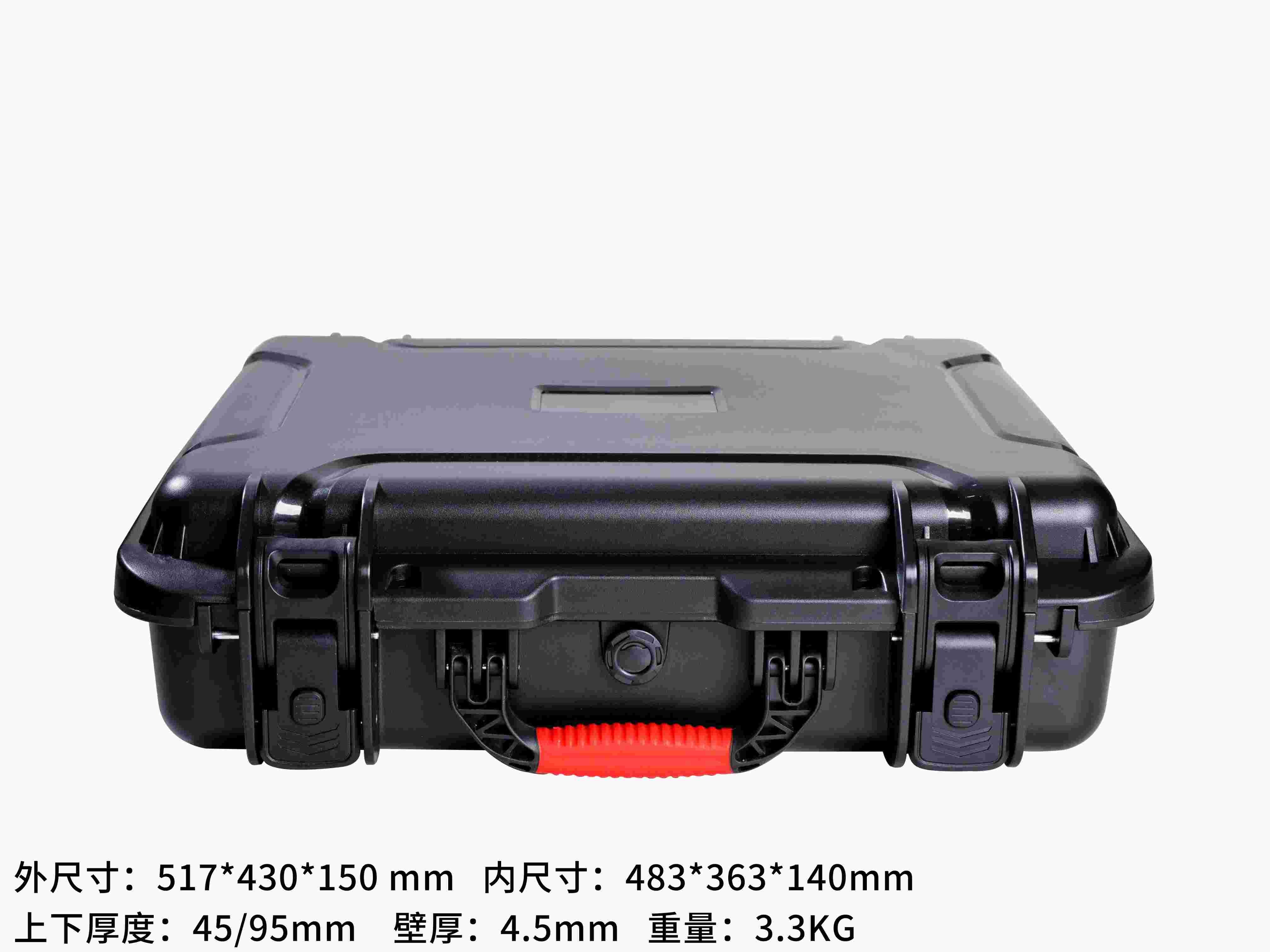
For decades, the protective case has been a passive container—a shell whose only job was to keep equipment safe from physical threats. But the convergence of miniaturized sensors, low-power wide-area networks, and cloud computing is transforming the humble protective case into an active, intelligent node in the Internet of Things. Smart IoT protective cases don't just protect equipment—they monitor it, track it, authenticate access to it, and predict when maintenance is needed. This article explores the architecture, capabilities, and applications of this emerging product category that KeXin is bringing to market.
Three-Layer IoT Architecture for Smart Cases
Smart protective cases implement a three-layer IoT architecture that mirrors the sensor-edge-cloud paradigm of industrial IoT systems. The sensor layer, embedded within the case structure, comprises environmental sensors (temperature, humidity, barometric pressure, accelerometer for shock/vibration), position sensors (GPS/GNSS receiver with multi-constellation support), and access control sensors (electronic lock status, lid open/close detection, tamper detection). These sensors are connected to an edge processing unit—a low-power microcontroller with onboard memory that handles sensor data acquisition, local event detection (e.g., shock threshold exceeded), and data compression before transmission.
The communication layer provides the data link between the case and the cloud. For most applications, cellular IoT technologies—4G LTE Cat-M1 and NB-IoT—provide the optimal balance of coverage, power consumption, and data throughput. These networks deliver coverage in most populated areas worldwide, with power consumption low enough that a smart case can operate for 6–12 months on a single rechargeable battery. For cases deployed in truly remote areas beyond cellular coverage, satellite IoT networks (such as Iridium SBD or Inmarsat IsatData Pro) provide global connectivity with lower data rates and higher latency, suitable for position reporting and critical alerts. LoRaWAN provides an alternative for cases that remain within range of private or public LoRa network gateways, offering multi-kilometer range with extremely low power consumption.
The cloud platform layer receives, stores, processes, and visualizes the data stream from the case fleet. This is where raw sensor data becomes actionable intelligence: geofencing alerts when a case deviates from its planned route, environmental excursion reports showing temperature or humidity violations during transport, cumulative shock exposure summaries for predictive maintenance, and audit trail reports showing every access event with timestamp and authorized user identification. The cloud platform also enables fleet management—simultaneously monitoring hundreds or thousands of cases across global supply chains.
Key Smart Case Capabilities
Real-Time Environmental Monitoring
Temperature, humidity, and pressure sensors sample the case interior environment at configurable intervals and transmit data to the cloud. For cold chain logistics—pharmaceuticals, vaccines, biologics, perishable reagents—this provides regulatory-grade temperature records that demonstrate compliance with storage requirements throughout the transport chain. The system generates immediate alerts when temperature excursions beyond user-defined thresholds are detected, enabling intervention before product quality is compromised.
Geofencing and Location Tracking
GPS/GNSS positioning combined with cellular triangulation provides continuous location awareness. Users define geofences—virtual perimeters around warehouses, transit points, customer sites, or restricted areas—and receive alerts when a case enters or exits these zones. For high-value equipment in transit, this provides both theft deterrence (the case reports its location) and recovery capability (last known position transmitted before battery depletion or signal loss). Historical location trails provide complete chain-of-custody documentation, valuable for regulated industries and insurance compliance.
Shock and Vibration Event Logging
A triaxial accelerometer continuously monitors the case for impact events that exceed programmable thresholds. When a significant shock is detected, the event is timestamped with GPS location and stored in the case's memory for later transmission. This creates a forensic record of rough handling events—exactly when and where the case was dropped or struck. For logistics accountability, this data identifies carriers or routes with excessive handling damage, enabling corrective action. For equipment maintenance, cumulative shock data feeds predictive models that estimate when equipment should be inspected or serviced based on transport stress rather than calendar time.
Electronic Access Control and Audit Trail
Electronic locks replace traditional mechanical latches with keypad, RFID, or biometric access control. Each access event—who opened the case, when, at what location—is logged and transmitted to the cloud, creating an immutable audit trail. This addresses critical requirements in defense (two-person rule compliance for sensitive equipment), pharmaceutical (controlled substance accountability), and high-value logistics (proof that a case was not tampered with between departure and arrival). Electronic locks can be remotely enabled or disabled through the cloud platform, providing real-time access management across distributed case fleets.
Predictive Maintenance
By analyzing trends in sensor data—increasing seal compression variability, latch cycle counts approaching design limits, cumulative shock energy exceeding maintenance thresholds—the cloud platform can predict when a case is approaching the end of its reliable service life and recommend proactive maintenance before failure occurs. This transforms case maintenance from reactive (fix it when it breaks) to predictive (fix it before it breaks), reducing unplanned downtime and equipment exposure to risk.
Application Scenarios
Medical Cold Chain: Smart cases for vaccine transport, clinical trial specimens, and temperature-sensitive pharmaceuticals with real-time temperature monitoring, geofencing for distribution center arrival/departure, and electronic access logs for chain-of-custody compliance with FDA 21 CFR Part 11 and EU GDP guidelines.
Defense Asset Tracking: Cases for sensitive military equipment with GPS tracking, tamper detection, two-person electronic access control, and satellite communication for operations beyond cellular coverage. Integration with military logistics information systems for automated asset visibility.
Offshore and Remote Equipment: Cases for oil and gas instrumentation, mining survey equipment, and remote monitoring gear with satellite connectivity for position reporting from locations without cellular coverage, environmental monitoring for equipment condition assessment during extended deployments, and shock logging for insurance claims documentation.
Film and Broadcast Production: Cases for cameras, lenses, and audio equipment with RFID-based inventory management (automatically detecting which equipment is in which case), geofencing for location and studio equipment tracking, and environmental monitoring for sensitive optics and electronics.
Scientific Expeditions: Cases for field research equipment, sample collection kits, and portable laboratory instruments with GPS tracking for equipment cached at remote field sites, environmental monitoring to verify sample storage conditions, and satellite communication for expeditions beyond cellular range.
KeXin Smart Case Product Launch — Q4 2026
KeXin is developing our first-generation smart protective case platform for launch in Q4 2026. The initial product line will be based on our proven 8-Series case platform with integrated IoT electronics developed in partnership with leading IoT module manufacturers. The launch configuration includes LTE Cat-M1/NB-IoT cellular connectivity, GPS/GNSS positioning, temperature/humidity/pressure sensing, triaxial shock detection, and electronic access logging. The cloud platform, accessible via web browser and mobile app, provides fleet dashboard, geofencing, alert configuration, and historical data export. Custom integration with customer ERP, WMS, and logistics platforms will be available through REST API. Contact KeXin to register for early access to the smart case beta program and to discuss your specific IoT requirements for protective cases.
Conclusion
The smart IoT protective case represents the next evolution in equipment protection—from passive container to active guardian. By integrating environmental sensing, location tracking, access control, and cloud analytics into the case platform, organizations gain unprecedented visibility into the conditions and chain of custody of their most valuable equipment. The return on investment extends beyond theft prevention and damage reduction to include regulatory compliance automation, logistics optimization, predictive maintenance, and data-driven decision-making. KeXin's Q4 2026 smart case launch will bring these capabilities to our customers with the same reliability and durability that have defined our protective cases for 25 years.