
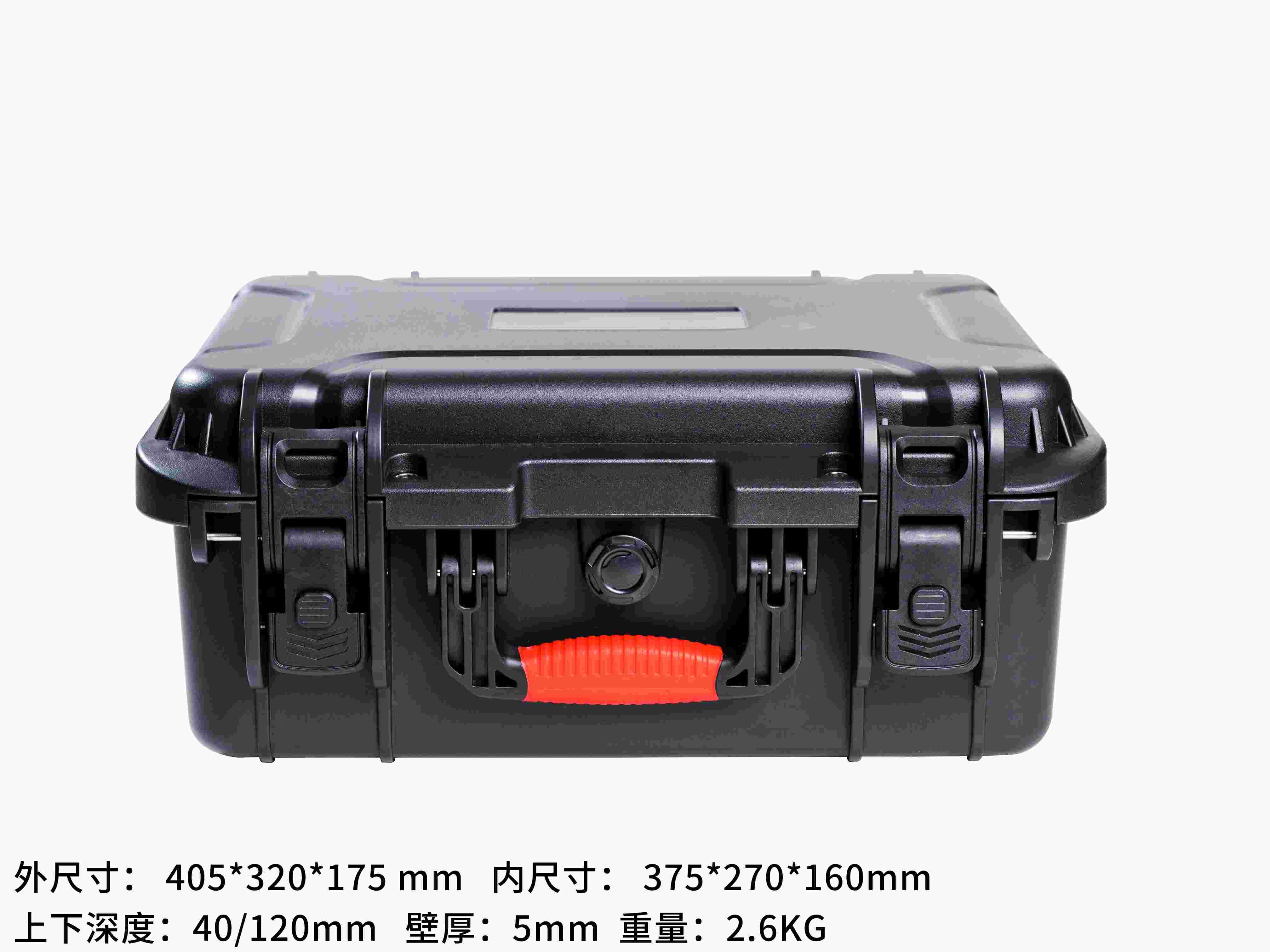
The protective case industry is undergoing a transformation in 2026 that goes far beyond incremental material improvements. Five converging trends — IoT smart monitoring, deep customization, sustainable materials, lightweight-strength optimization, and multi-scenario specialization — are reshaping how cases are designed, manufactured, sold, and used. KeXin New Materials is positioned at the intersection of these trends, leveraging 25 years of manufacturing expertise and newly established R&D capabilities to deliver next-generation protective solutions. This article examines each trend in detail and explains how KeXin is responding.
Trend 1: IoT Smart Monitoring — The Case Becomes a Sensor Platform
The most disruptive trend in 2026 is the integration of IoT (Internet of Things) monitoring technology into protective cases. Historically, a protective case was a passive container — it protected contents but provided no information about its own condition or the environment inside. IoT integration transforms the case into an active monitoring platform that reports real-time data on conditions affecting equipment safety.
Sensor modules are the hardware foundation. Current-generation modules clip into a dedicated slot inside any KeXin 8-series case and measure four critical parameters:
- Temperature: ±0.5°C accuracy from -40°C to +85°C. Alerts trigger when temperature exceeds user-defined thresholds, critical for pharmaceutical cold-chain and battery storage compliance.
- Humidity: ±3% RH accuracy from 0-100% RH. Excess humidity corrodes electronics and promotes mold on optical components.
- Shock events: Triaxial accelerometer detecting impacts above user-set g-thresholds (typically 5-50g). Each event is logged with timestamp, magnitude, and direction — creating an indisputable record for insurance claims and liability determination.
- GPS location: Real-time position tracking for fleet management. When a case leaves a designated geofence, the system alerts the logistics manager, enabling rapid response to misrouting or theft.
Communication protocols bridge the sensor to the user. BLE (Bluetooth Low Energy) provides local connectivity to a mobile app within 10 meters — ideal for warehouse workers checking case conditions on arrival. Cellular connectivity (NB-IoT or LTE-M) sends data to a cloud dashboard for remote monitoring across continents. The cloud dashboard aggregates data from hundreds of cases, presenting fleet-wide analytics including route optimization, risk scoring per transport lane, and predictive maintenance alerts based on accumulated shock history.
KeXin plans to launch its IoT monitoring module in Q4 2026, initially compatible with Series 8 cases. The module will be backward-compatible — existing WL-series cases can accept the module without modification, since the sensor slot is integrated into current production designs.
Trend 2: Deep Customization — From Standard Products to Purpose-Built Solutions
The era of "one case fits all" is ending. Professional users increasingly demand cases tailored to their specific equipment, workflow, and brand identity. KeXin's customization depth now extends far beyond logo printing and foam cutting:
- Shell color molding: Custom Pantone-matched colors molded into the PP or ABS shell material, not painted on. This means the color cannot scratch off, fade, or peel. KeXin's in-house compounding facility mixes color masterbatch directly into the raw polymer before injection molding, ensuring uniform color throughout the shell wall thickness.
- Multi-layer foam architecture: Instead of a single solid foam block, advanced liners use 2-3 density layers: a firm outer layer (80 kg/m³ EVA) for structural support and impact absorption, a medium middle layer (45 kg/m³) for general cushioning, and a soft contact layer (20 kg/m³ PU) for scratch-sensitive surfaces. This layered approach protects delicate equipment surfaces while maintaining overall shock protection.
- Integrated accessory compartments: Custom foam inserts can include dedicated pockets for cables, batteries, manuals, and small accessories — eliminating the need for separate accessory bags and ensuring everything needed for field deployment stays together in one case.
- Workflow-specific layouts: Medical, military, and broadcast users each have distinct workflow patterns. A surgical instrument case organizes tools in surgical sequence order. A broadcast case arranges camera, lens, and accessories for fastest assembly at a location. These layouts are designed through collaboration between KeXin's foam engineers and the customer's field operations team.
The customization trend also extends to packaging — OEM customers increasingly request cases shipped with their equipment pre-installed, tested, and sealed, ready for end-user delivery without any additional packaging step. KeXin's assembly line accommodates this "case as final packaging" workflow, reducing the customer's logistics complexity and cost.
Trend 3: Sustainable Materials — Bio-Based PP and Recycled Content
Environmental sustainability is no longer optional in the protective case market — it is a procurement prerequisite for European and increasingly North American buyers. The EU Green Deal's Circular Economy Action Plan specifically targets plastic products, requiring recycled content minimums and extended producer responsibility by 2030. KeXin's sustainability strategy addresses this through two parallel material development tracks:
- Bio-based PP: Using industrial sugarcane-derived ethanol as the propylene monomer feedstock, bio-based PP delivers identical mechanical properties to petroleum-derived PP while reducing the carbon footprint of each case by approximately 25%. KeXin's bio-based PP prototype (30% bio-content) is scheduled for Q1 2027 release, with a 50% bio-content version targeted for 2028. The key technical challenge is ensuring consistent molecular weight distribution and isotactic index in bio-derived PP — properties that directly affect impact resistance and processability.
- Recycled PP content: Post-consumer recycled (PCR) PP from verified recycling streams can be blended at 10-20% into new case shells without compromising mechanical performance. KeXin is establishing PCR supply chains through certified European recyclers to ensure traceability and material quality. Each PCR batch undergoes full mechanical testing (impact, tensile, flexural, and MFI) before approval for production use.
- Recyclability design: All KeXin cases are designed for end-of-life recycling. The PP and ABS shells carry resin identification codes (5 and 7 respectively). Metal components (latches, hinges, handles) are mechanically separable without special tools. Foam inserts are identified by material type for appropriate recycling stream routing. KeXin provides a Product Recycling Guide for each series to assist customers in proper end-of-life processing.
Trend 4: Lightweight-Strength Optimization — FEA and Microcellular Foaming
The engineering contradiction between light weight and high strength is being resolved through two advanced technologies:
- Finite Element Analysis (FEA) topology optimization: Instead of designing shell wall thickness uniformly, FEA topology optimization identifies exactly where material is needed for structural integrity and where it can be removed without compromising performance. KeXin's engineering team uses ANSYS-based FEA to optimize every new case design, resulting in wall thickness distributions that vary from 2.5mm in high-stress corner regions to 1.8mm in low-stress flat areas. This selective thinning reduces overall case weight by 8-12% compared to uniform-thickness designs while maintaining or improving impact resistance.
- Microcellular foaming (MuCell technology): By introducing precisely controlled nitrogen gas micro-bubbles into the polymer during injection molding, MuCell technology creates a cellular structure within the shell wall that reduces material consumption by 6-10% while maintaining surface quality and mechanical properties. The microcells (average diameter 50-100 μm) are too small to affect surface appearance or create visible porosity. KeXin has installed MuCell-capable injection molding equipment in its Zhongshan facility and is validating the process for Series 8 production. The weight reduction from MuCell combined with FEA topology optimization can achieve total weight savings of 15-20% per case — a transformative improvement for air freight cost-sensitive applications.
Trend 5: Multi-Scenario Specialization — Drone, Medical, Tactical, EV
The protective case market is fragmenting into specialized segments, each demanding case designs optimized for their unique workflow, regulatory, and environmental requirements:
- Drone and UAV transport: Drone cases must accommodate folded airframes, detachable propellers, ground control stations, and multiple battery packs in a single case. The case must also comply with lithium battery transport regulations (IATA PI967 Section II for batteries contained in equipment). KeXin's drone-specific case designs include fire-resistant battery compartments and ventilation channels that prevent thermal accumulation during storage.
- Medical equipment: Medical cases must meet hygiene compliance standards (ISO 13485 for medical device packaging), survive hospital sterilization-area wash-down procedures, and often carry regulatory markings for specific device categories. The foam liner must be antimicrobial-treated or designed for easy disinfection. KeXin's medical case line uses medical-grade EVA foam (ISO 10993 biocompatibility tested) and includes hygiene-compliant exterior surfaces.
- Tactical and defense: Military cases require MIL-STD-810 compliance for environmental testing (drop, vibration, temperature shock, salt fog, altitude). They must also accommodate panel-mounted electronics, tactical color requirements (olive drab, desert tan, urban gray), and quick-access latch configurations. KeXin's 8-series tactical variants meet MIL-STD-810G key test methods and are available in three standard military color options.
- Electric vehicle (EV) battery and component transport: The EV industry creates a new protective case demand category — transporting lithium battery modules, EV control units, and charging equipment. These cases must meet UN38.3 battery transport requirements, provide thermal insulation to prevent temperature extremes during transit, and accommodate the unusual shapes of battery packs (flat, rectangular, or pouch-form). KeXin is developing EV-specific case sizes optimized for standard battery module dimensions.
KeXin's R&D Roadmap: Aligned with Industry Direction
KeXin's R&D investment plan for 2026-2028 directly addresses all five industry trends:
- IoT module launch (Q4 2026): BLE + cellular sensor module for Series 8, with cloud dashboard
- Bio-based PP prototype (Q1 2027): 30% bio-content case in WL802 size for European market validation
- MuCell process integration (Q2 2027): Full Series 8 production line conversion to microcellular foaming
- Carbon fiber composite lid (Q2 2027): Ultra-light lid option for aerospace applications
- CNAS laboratory accreditation (target 2027): In-house testing lab meeting China National Accreditation Service standards, enabling self-certification for domestic compliance tests
- 5% revenue commitment to R&D: Guaranteed annual R&D spend at 5% of revenue, rising to 6% by 2028
The protective case industry is entering a period of rapid innovation-driven differentiation. Companies that invest in IoT, sustainability, and specialization will capture the premium segments; those that remain in the generic commodity space will face margin compression from low-cost competitors. KeXin's strategy positions the company firmly in the innovation-driven premium segment, with a clear roadmap from current capabilities to next-generation products. For partnership inquiries on any of these development tracks, contact KeXin through the inquiry form.