
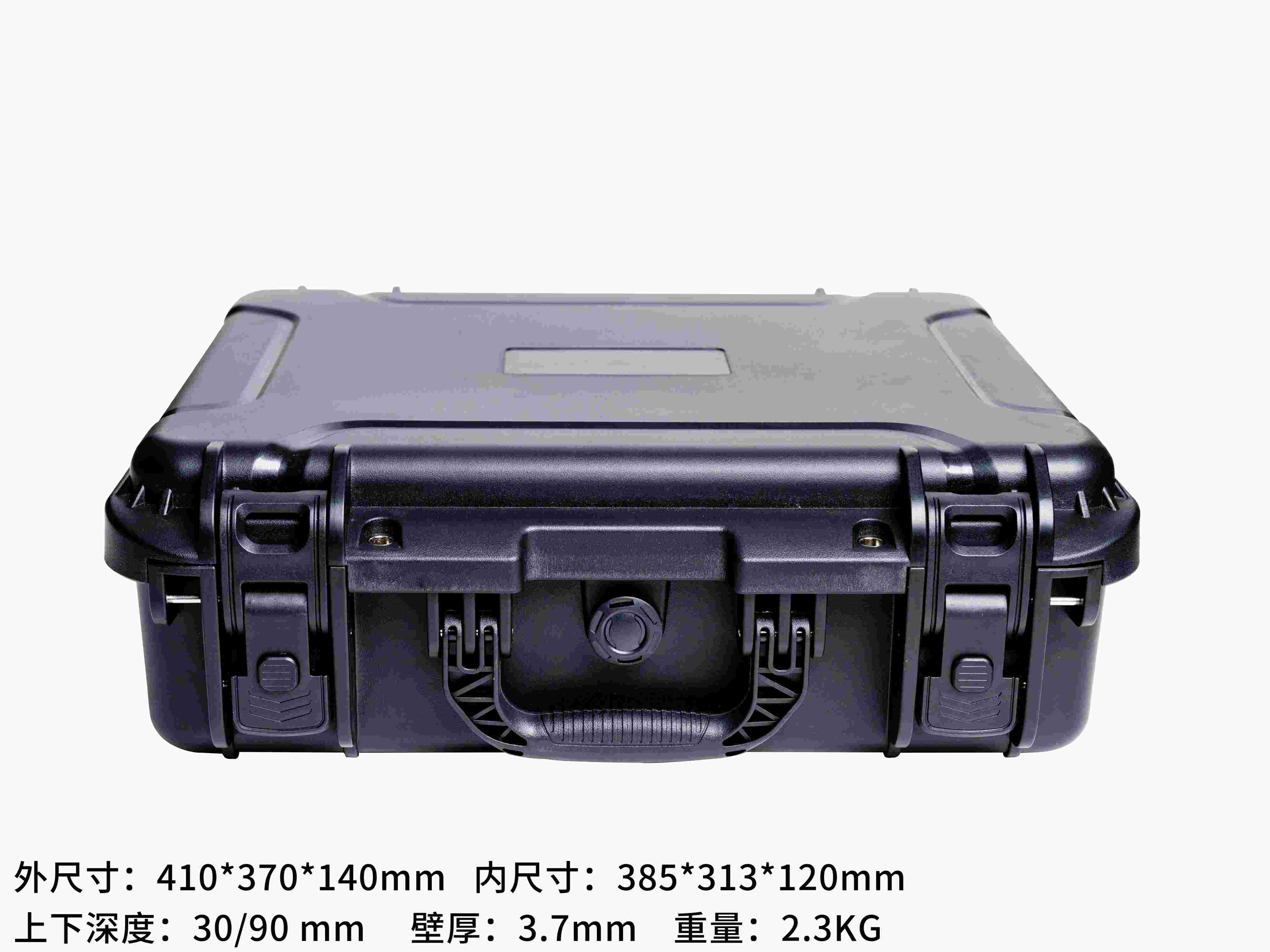
The seal is arguably the most critical component of any IP-rated protective case. While the case shell provides structural integrity, it is the seal—the continuous gasket running along the lid-channel interface—that determines whether your equipment stays dry in a rainstorm, survives an accidental dunking, or resists fine dust infiltration in a desert environment. Understanding seal materials and cross-section geometries is essential for selecting the right case for your application.
Silicone Rubber: The Premium Seal Material
Silicone rubber is the gold standard for protective case seals, offering the widest operating temperature range of any elastomer commonly used in sealing applications. High-quality silicone seals maintain their elasticity and sealing performance from -60°C to +250°C, making them suitable for everything from arctic expeditions to desert military operations where cases may be left in direct sunlight for extended periods.
The molecular structure of silicone—a silicon-oxygen backbone rather than the carbon-carbon backbone of organic rubbers—gives it exceptional resistance to UV radiation, ozone, and oxidative aging. This translates to significantly longer service life compared to other seal materials, with silicone seals often lasting 15–20 years without significant degradation when properly maintained. This aging resistance is especially important for cases that see intermittent use over many years, such as military equipment cases or emergency response kits.
Silicone's biocompatibility is another distinguishing advantage. Medical-grade silicone seals meet USP Class VI and ISO 10993 standards for biocompatibility, making them the required choice for medical device transport cases, pharmaceutical shipping containers, and surgical instrument cases. The material can withstand repeated sterilization cycles including autoclaving (steam at 121–134°C), ethylene oxide gas, and gamma irradiation without losing sealing effectiveness.
The primary drawbacks of silicone are its higher cost—typically 3–5 times that of EPDM—and its lower tear strength and abrasion resistance compared to other elastomers. Silicone seals require careful handling during case assembly and should not be subjected to sharp-edged tools or excessive stretching during installation.
EPDM (Ethylene Propylene Diene Monomer): The Balanced Performer
EPDM rubber is the most practical choice for the majority of protective case applications, offering an excellent balance of performance and cost-effectiveness. EPDM's saturated polymer backbone gives it outstanding resistance to weathering, ozone, UV radiation, and heat aging—properties that translate to reliable sealing performance across a temperature range of -40°C to +120°C for standard grades, with special formulations extending the high end to +150°C.
EPDM excels in water and steam resistance, making it ideal for IP67-rated cases that may be temporarily submerged. Its compression set resistance—the ability to recover its original shape after being compressed for extended periods—is excellent, ensuring that a case that has been latched shut for months or years will still seal properly when reopened and closed again. This is particularly important for emergency equipment cases, seismic monitoring stations, and cached supplies that may sit unused for long periods.
EPDM's electrical insulation properties are noteworthy: the material has a dielectric strength of 20–25 kV/mm, making it suitable for cases housing sensitive electronic equipment where any seal conductivity could cause issues. EPDM seals are also resistant to polar solvents including water, alcohols, glycols, and phosphate ester hydraulic fluids, though they swell and degrade when exposed to mineral oils, gasoline, and hydrocarbon solvents.
KeXin specifies premium EPDM compounds with optimized cure systems for our 6-Series and 8-Series cases, achieving compression set values below 20% after 22 hours at 70°C—well within the requirements for reliable long-term IP67 performance.
NBR (Nitrile Butadiene Rubber): The Oil-Resistant Specialist
NBR fills a specific niche in protective case sealing: applications where the case will be exposed to oils, fuels, and hydrocarbon-based chemicals. The acrylonitrile content of NBR—typically 18% to 50%—determines its oil resistance, with higher ACN content providing better resistance to non-polar solvents but reduced low-temperature flexibility. Standard NBR seals operate effectively from -30°C to +100°C.
For automotive diagnostic equipment cases, aircraft maintenance tool kits, and oil-field instrumentation cases, NBR seals provide the chemical resistance that silicone and EPDM cannot. NBR resists swelling and degradation from motor oil, transmission fluid, diesel fuel, hydraulic oils, and greases that would rapidly destroy EPDM seals. This specialized chemical resistance makes NBR the seal of choice for cases deployed in engine compartments, refineries, and workshops.
The primary limitation of NBR is its poor UV and ozone resistance. Unprotected NBR seals will crack and deteriorate within months of outdoor exposure. For this reason, NBR seals are typically specified for cases used in controlled or indoor environments, or when the case itself provides adequate shielding from direct sunlight. NBR also has lower compression set resistance than EPDM, meaning sealed cases should be opened and resealed periodically if stored in a compressed state for extended periods.
Cross-Section Geometry: How Shape Affects Seal Performance
Beyond material selection, the cross-sectional shape of the seal profoundly affects its performance, compression characteristics, and tolerance for manufacturing variations. KeXin engineers evaluate four primary cross-section geometries for each case design.
D-Type (Solid D-section): The D-profile features a flat base that seats securely in the lid channel with a rounded outer surface that compresses against the case body. This geometry provides the largest sealing contact area and the most forgiving tolerance for minor misalignment. D-type seals generate high sealing force with moderate latch pressure and are the most commonly specified profile for general-purpose IP67 cases. The solid cross-section provides excellent compression set resistance and long service life.
P-Type (Hollow Bulb with Tail): The P-profile consists of a hollow circular bulb section connected to a flat tail that anchors in the channel. The hollow bulb collapses under compression, requiring lower closing force than solid profiles while still maintaining a continuous seal line. P-type seals excel in applications with large case openings where latch force must be kept manageable, and they accommodate wider manufacturing tolerances. However, the hollow bulb is more susceptible to compression set and may lose effectiveness over time if the case is stored latched for very long periods.
O-Type (Solid O-Ring): The circular O-ring profile provides a line-contact seal rather than the area-contact of D or P types. This concentrates sealing force into a narrow band, making O-rings very effective for high-pressure differential applications—such as cases designed for air transport where internal pressure may differ significantly from cabin pressure. O-ring seals require precisely machined channel dimensions and are less tolerant of manufacturing variations, but they achieve the highest sealing reliability per unit of closing force.
Lip-Type (Single or Double Lip): Lip seals feature one or more flexible flaps that deflect against the mating surface under pressure. This design is self-energizing—increasing internal or external pressure pushes the lip tighter against the sealing surface, improving the seal. Lip seals are often used in combination with a secondary O-ring or D-type seal for redundant protection in critical applications. The key advantage is their ability to maintain seal integrity even as the case experiences slight deformation from impact or pressure changes.
Material Selection Guide by Application
General Outdoor / All-Weather (IP65–IP67): EPDM D-type or P-type seals provide the best balance of weather resistance, sealing reliability, and cost. KeXin's 8-Series cases use precisely this configuration for proven IP67 performance.
Medical / Laboratory / Sterilization: Silicone O-type or D-type seals are required for biocompatibility and sterilization tolerance. The premium material cost is justified by regulatory compliance and patient safety requirements.
Automotive / Industrial / Oil Exposure: NBR lip-type or D-type seals provide the chemical resistance needed for hydrocarbon exposure. Consider dual-seal designs where UV exposure is also a concern.
Extreme Environments (Military, Polar, Desert): Silicone seals with D-type or O-type geometry offer the widest temperature range and best UV/ozone aging resistance. The higher initial cost is offset by dramatically reduced maintenance and replacement frequency.
Seal Maintenance Best Practices
Even the best seal material will degrade without proper care. Clean seals after each use in dusty or muddy conditions with a soft, lint-free cloth and mild soap solution. Inspect for cuts, compression set (flattening), and chemical attack (swelling, tackiness) monthly for frequently used cases. Apply a thin film of silicone grease to silicone and EPDM seals every 3–6 months—this lubricates the seal surface, reduces friction during opening and closing, and provides a secondary barrier against moisture ingress. Never use petroleum-based lubricants on EPDM or silicone seals, as these cause swelling and degradation. Store cases unlatched with the lid slightly open to allow the seal to fully recover its shape between uses.
Conclusion
The seal is a precision-engineered component whose material and geometry choices have profound effects on protective case performance. Silicone delivers the widest temperature range and best aging resistance at a premium price; EPDM provides the best overall balance for most applications; and NBR serves specialized oil-exposure scenarios. Combined with the right cross-section geometry—D-type for general use, P-type for large openings, O-type for pressure differentials, and lip-type for self-energizing redundancy—the seal becomes the guarantee that your equipment remains protected regardless of environmental conditions. KeXin's engineering team evaluates every case design against its intended use to select the optimal seal configuration, ensuring our IP67 rating is backed by materials science, not marketing claims.