
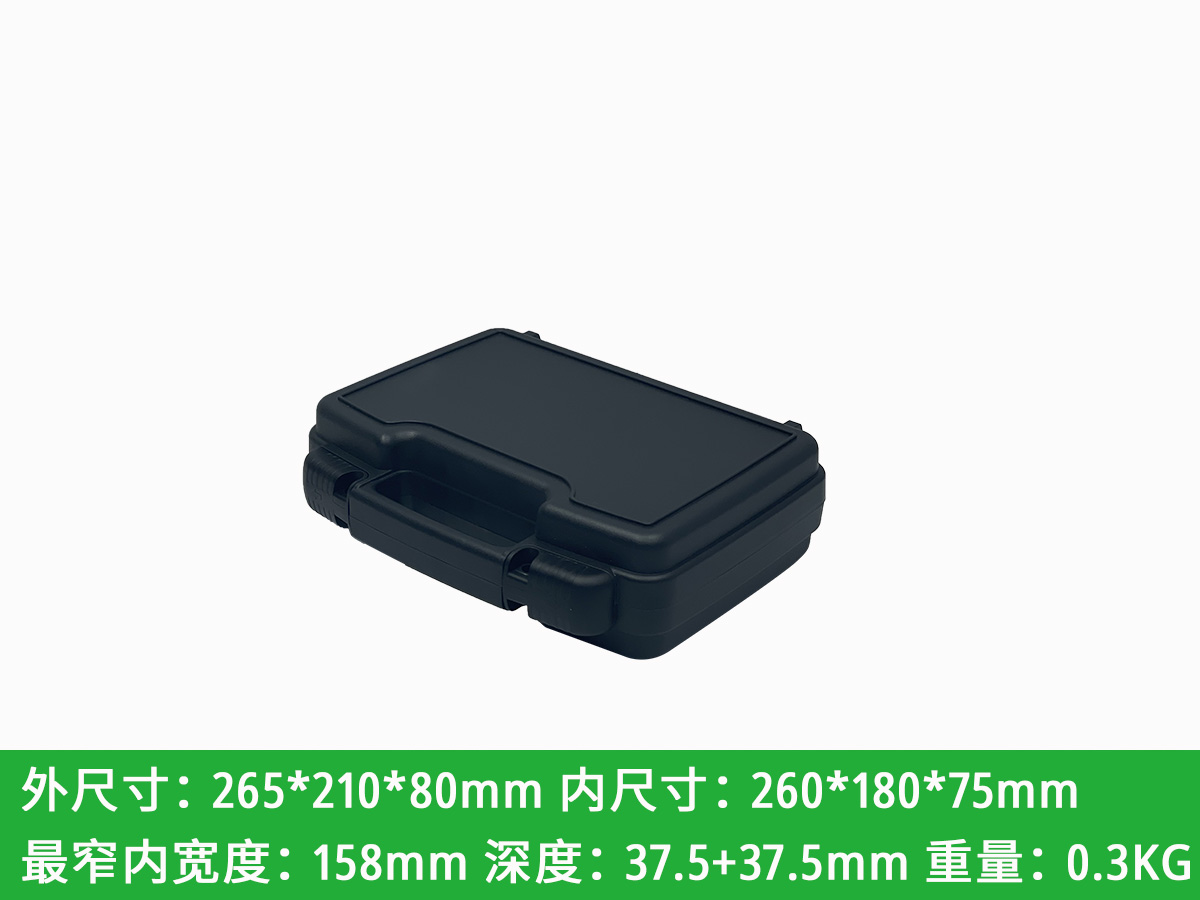
In daily work, toolboxes and protective cases are often confused, but they differ fundamentally in design purpose, material choice, structural strength, and protection ratings. Choosing the wrong box can damage tools, reduce efficiency, or even create safety risks.
Toolbox Characteristics
Toolboxes are designed mainly for storing and carrying hand tools, power tools, and accessories. Their structure is usually simple, with thinner walls, handles, and latches optimized for frequent daily opening and closing. Toolboxes prioritize lightness, capacity, and compartmentalized storage rather than extreme environmental protection.
KeXin Series 7 PP toolboxes are typical toolbox products, ideal for home repairs, vehicle maintenance, and factory maintenance.
Protective Case Characteristics
Protective cases (also called safety cases or equipment cases) are designed for precision and valuable equipment. Their features include thick, impact-resistant, and compression-resistant shell materials, sealing gaskets providing waterproof and dustproof protection (usually IP65-IP67), rugged latches that withstand drops and vibration, custom EVA foam inserts to hold devices securely, and suitability for air transport, field work, and military missions.
How to Choose
If you only need to store ordinary tools in a dry environment, a toolbox is sufficient. But if your equipment is high-value, sensitive to shock and humidity, or used outdoors, in rain, or for air transport, choose a protective case.
KeXin Product Lines
KeXin offers both Series 7 toolboxes and Series 1/2/6/8 protective cases, covering everything from ordinary tool storage to precision instrument protection. We can also customize foam inserts and case structures based on your tools and equipment.