
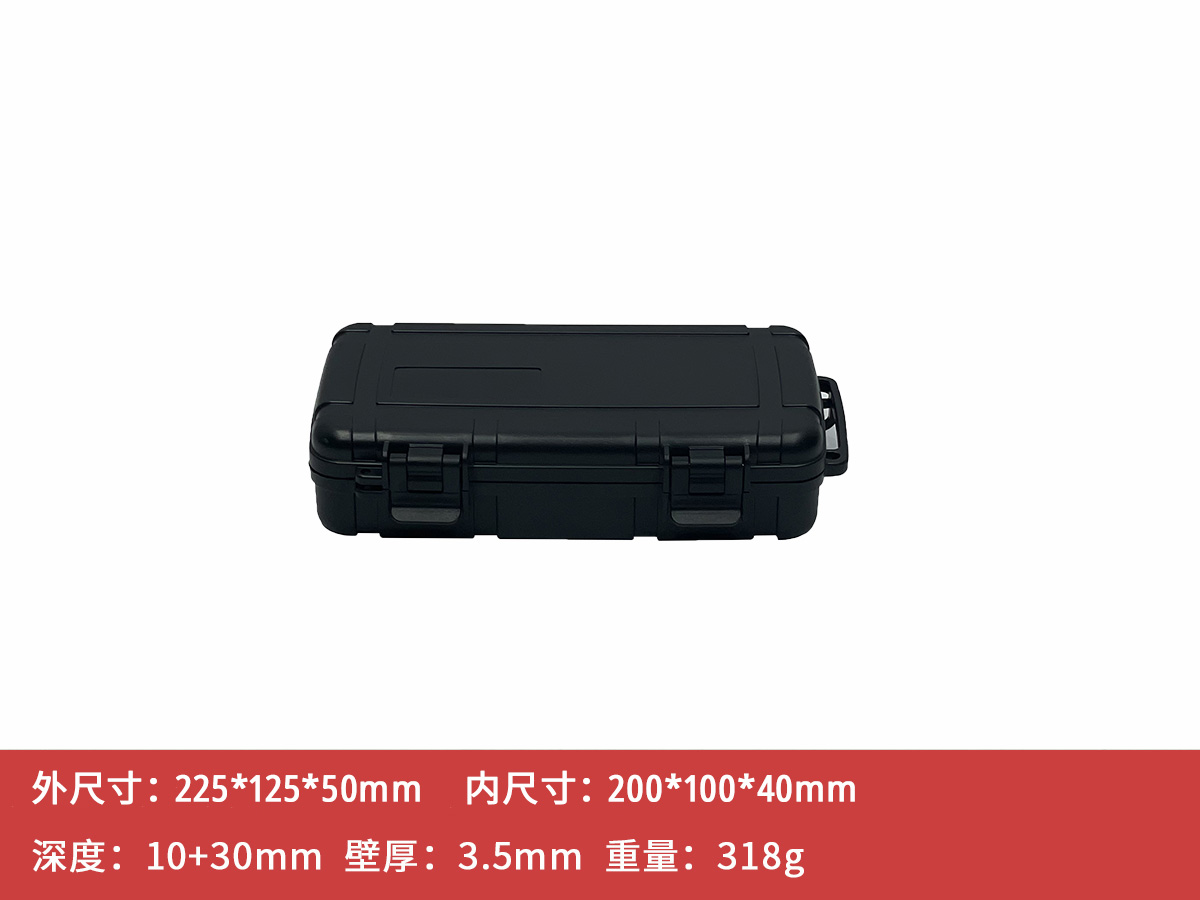
The difference between a protective case that performs as advertised and one that fails when it matters most comes down to testing. At KeXin, quality is not inspected into products at the end of the production line—it is built in through a comprehensive, multi-stage quality control system that spans incoming raw materials, in-process manufacturing, and finished product validation. This article provides a transparent look at the testing standards and procedures that underpin every KeXin protective case.
IQC: Incoming Quality Control — Gatekeeping Raw Materials
The quality of a protective case begins long before the first pellet of plastic enters the injection molding machine. KeXin's Incoming Quality Control (IQC) laboratory tests every batch of raw materials against certified specifications before they are released to production. This gatekeeping function prevents defective materials from ever entering the manufacturing process.
For plastic resins (PP, ABS, PC, HDPE), IQC testing includes Melt Flow Index measurement to verify processability within the specified range for each mold and machine configuration, density determination by displacement method to confirm material grade, and color measurement using spectrophotometry against master standards to ensure batch-to-batch color consistency. Each resin batch also undergoes moisture content analysis, as excessive moisture in hygroscopic materials like ABS and PC causes processing defects including splay, bubbles, and reduced mechanical properties.
For seal materials (silicone, EPDM, NBR), IQC testing includes Shore A hardness measurement on molded test plaques, tensile strength, and elongation at break testing per ASTM D412 standards. These mechanical properties directly correlate with seal performance—a seal that is too hard will require excessive closing force and may not conform to the mating surface; a seal that is too soft may extrude from the channel under compression. IQC also verifies the cross-sectional dimensions of extruded seal profiles using optical comparators to ensure they will seat properly in the lid channel and provide the designed compression ratio.
For metal hardware—latches, hinges, hinge pins, pressure valve assemblies—IQC verifies material composition using X-ray fluorescence (XRF) analysis to confirm stainless steel grades (typically 304 or 316 for corrosion resistance) and checks dimensional tolerances with calibrated calipers and go/no-go gauges. A critical check for stainless steel components is the absence of magnetic response (austenitic grades should be non-magnetic), which indicates proper composition and heat treatment.
IPQC: In-Process Quality Control — Real-Time Manufacturing Oversight
Once production begins, KeXin's In-Process Quality Control (IPQC) system monitors every critical parameter in real time. Unlike IQC which is batch-based, IPQC is continuous, with inspection points embedded throughout the manufacturing flow.
At the start of each production shift and after each mold change, an hourly first-article inspection is conducted. The first case from each mold cavity is subjected to a full dimensional check against the engineering drawing, with measurements taken at a minimum of 15 critical points including internal length/width/depth, wall thickness at multiple locations, seal channel width and depth, hinge alignment, and latch engagement depth. Any deviation beyond the control limits triggers an immediate process adjustment and re-inspection before production resumes.
During continuous production, IPQC inspectors perform patrol inspections at 2-hour intervals, randomly sampling cases from the production line. Each patrol inspection covers visual appearance (surface finish, color consistency, absence of flow lines, sink marks, weld lines, flash, and contamination), dimensional spot-checks on key features, and weight verification—a rapid indicator of wall thickness consistency since any significant variation from target weight suggests a processing issue. Assembly quality is evaluated through functional testing of latch operation (smooth engagement, secure locking, reasonable release force), hinge movement, and pressure valve function.
OQC: Outgoing Quality Control — Final Validation Before Shipment
Before any batch of cases leaves our factory, it must pass KeXin's rigorous Outgoing Quality Control (OQC) program. OQC operates on a statistical sampling basis using Acceptable Quality Level (AQL) methodology per ISO 2859-1, with sample sizes and accept/reject criteria predefined for each quality characteristic based on criticality.
100% Visual Inspection: Every case in the sample undergoes a complete visual examination under standardized lighting conditions (1000–1500 lux). Inspectors check for cosmetic defects including scratches, color variations, contamination, incomplete fill, flash, and surface imperfections. The acceptance criterion is zero critical defects (anything that compromises structural integrity or seal function), and AQL 1.0 for minor cosmetic defects.
IP67 Batch Testing: For cases with IP67 rating claims, OQC performs a batch immersion test. A randomly selected sample of cases is submerged in water at a depth of 1 meter for 30 minutes (per IEC 60529 test conditions). After immersion, cases are opened and the interior is inspected with moisture-indicator paper for any water ingress. A single failure triggers a 100% retest of the batch and a root-cause investigation of the seal assembly process.
Drop Testing: Sample cases are loaded with a standardized weight equal to the case's rated payload and dropped from a height of 1.2 meters onto a concrete floor. The drop test protocol includes drops on each face, each edge, and each corner—26 orientations in total, following the principles of MIL-STD-810H Method 516.8. Post-drop inspection checks for case structural integrity (no cracking or permanent deformation that compromises closure), latch function (all latches must remain closed and operational), and seal integrity (IP67 immersion test following the drop sequence).
Latch Cycle Durability Testing: Latch mechanisms are life-cycle tested to 5,000 open-close cycles on a dedicated test fixture that simulates real-world use. A cycle consists of full latch release, lid opening to 90 degrees, lid closing, and latch engagement to the locked position. The acceptance criterion is that after 5,000 cycles, all latches must still engage positively, release smoothly, and maintain the required closing force (no more than 30% change from baseline).
Temperature Cycling: Cases are subjected to temperature cycling between -20°C and +60°C for 10 cycles with a 4-hour dwell at each temperature extreme per cycle. This test validates that differential thermal expansion between the case body, lid, seal, and metal hardware does not compromise fit, function, or IP rating. Post-cycling inspection includes dimensional verification, latch function, and IP67 immersion test.
Stacking Load Test: To verify that cases can withstand the compressive loads of warehouse stacking and containerized shipping, sample cases are loaded with their rated payload and stacked in the manufacturer's recommended configuration. An additional static load equivalent to 3 times the case weight is applied on top, and the assembly is maintained for 24 hours. Post-test inspection checks for lid deflection (must be fully recoverable), latch engagement (no loosening), and seal integrity.
Quality Documentation and Traceability
Every test result is documented and traceable to the production batch through KeXin's ERP-integrated quality management system. Each case carries a production date code and mold cavity identifier molded into the interior surface, enabling full traceability from raw material lot through manufacturing to final inspection. This traceability system supports rapid root-cause analysis in the rare event of a quality issue and provides customers with documented evidence of testing for their own quality assurance and regulatory compliance needs.
Continuous Improvement Through Quality Data
KeXin's quality system is not static—it continuously evolves based on the data generated by IQC, IPQC, and OQC activities. Monthly quality review meetings analyze defect trends, customer feedback, and field performance data to identify improvement opportunities. When a pattern emerges—such as a particular latch design showing increased wear rates at specific cycle counts, or a specific seal material performing differently in tropical vs. temperate climate shipments—the engineering team initiates a corrective action that flows back into design specifications, material selection, and testing protocols. This closed-loop quality system ensures that the KeXin case you receive today benefits from the cumulative knowledge gained from millions of cases produced over 25 years.
Conclusion
Quality in protective case manufacturing is not a single test or certification—it is a comprehensive system of material verification, process control, and performance validation that spans the entire product lifecycle. KeXin's IQC-IPQC-OQC framework, combined with documented traceability and continuous improvement processes, ensures that every case bearing the KeXin name delivers the protection performance our customers depend on. When you choose a KeXin case, you are choosing 25 years of accumulated quality engineering, backed by transparent testing standards and a commitment to excellence that extends from raw material receipt to final shipment.