
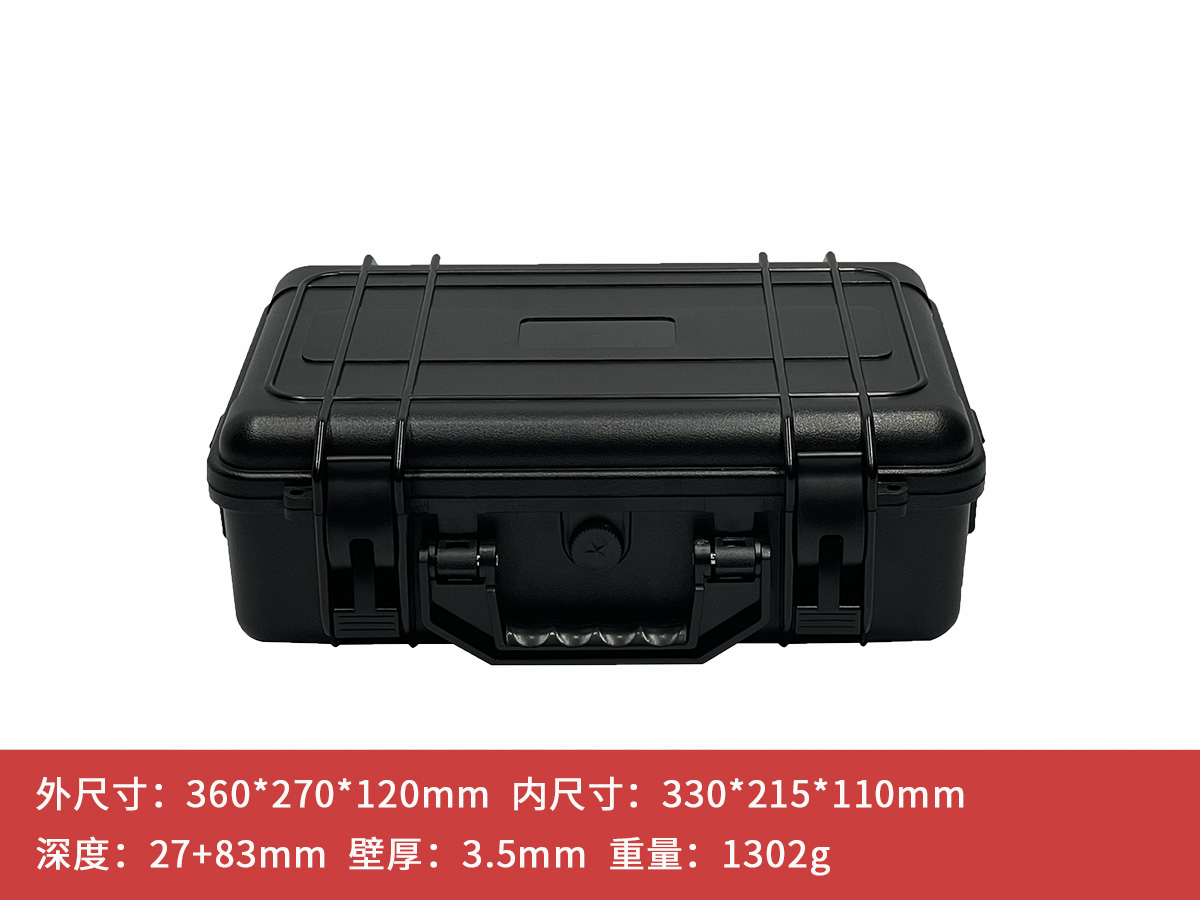
Latches are the most easily overlooked yet critical components of a protective case. A good latch system ensures sealing, prevents accidental opening, and withstands drops and impacts. KeXin pays close attention to latch selection in case design.
Butterfly Latch
The butterfly latch is the most common heavy-duty case latch, named for its wing-like appearance. Advantages include strong clamping force that resists high pulling forces, intuitive operation and easy opening/closing, ability to be fitted with padlocks or seals for added security, and suitability for large and heavy equipment cases. KeXin Series 8 large cases mostly use butterfly latches to ensure security during long-distance transport.
Snap Latch
Snap latches have a simple structure, usually made as one-piece plastic or metal spring latches. Advantages include low cost and light weight, fast opening and closing suitable for frequent use, and suitability for small and medium cases and toolboxes. Their clamping force is weaker than butterfly latches, so they are not suitable for large heavy cases.
Quick-Release Latch
Quick-release latches are commonly used in tactical, medical, and emergency scenarios. They can be operated with one hand, even while wearing gloves. Some also include self-locking features to prevent accidental opening.
Relationship Between Latches and Sealing
Latch clamping force directly affects gasket compression. Insufficient clamping prevents the gasket from compressing fully, reducing waterproof and dustproof performance. KeXin precisely calculates gasket compression ratios during latch design to ensure IP67 ratings.
How to Choose
Choose butterfly latches for large valuable equipment, snap latches for frequently used medium cases, and quick-release latches for tactical and medical rapid response. KeXin can configure the most suitable latch system for each case series according to customer needs.