
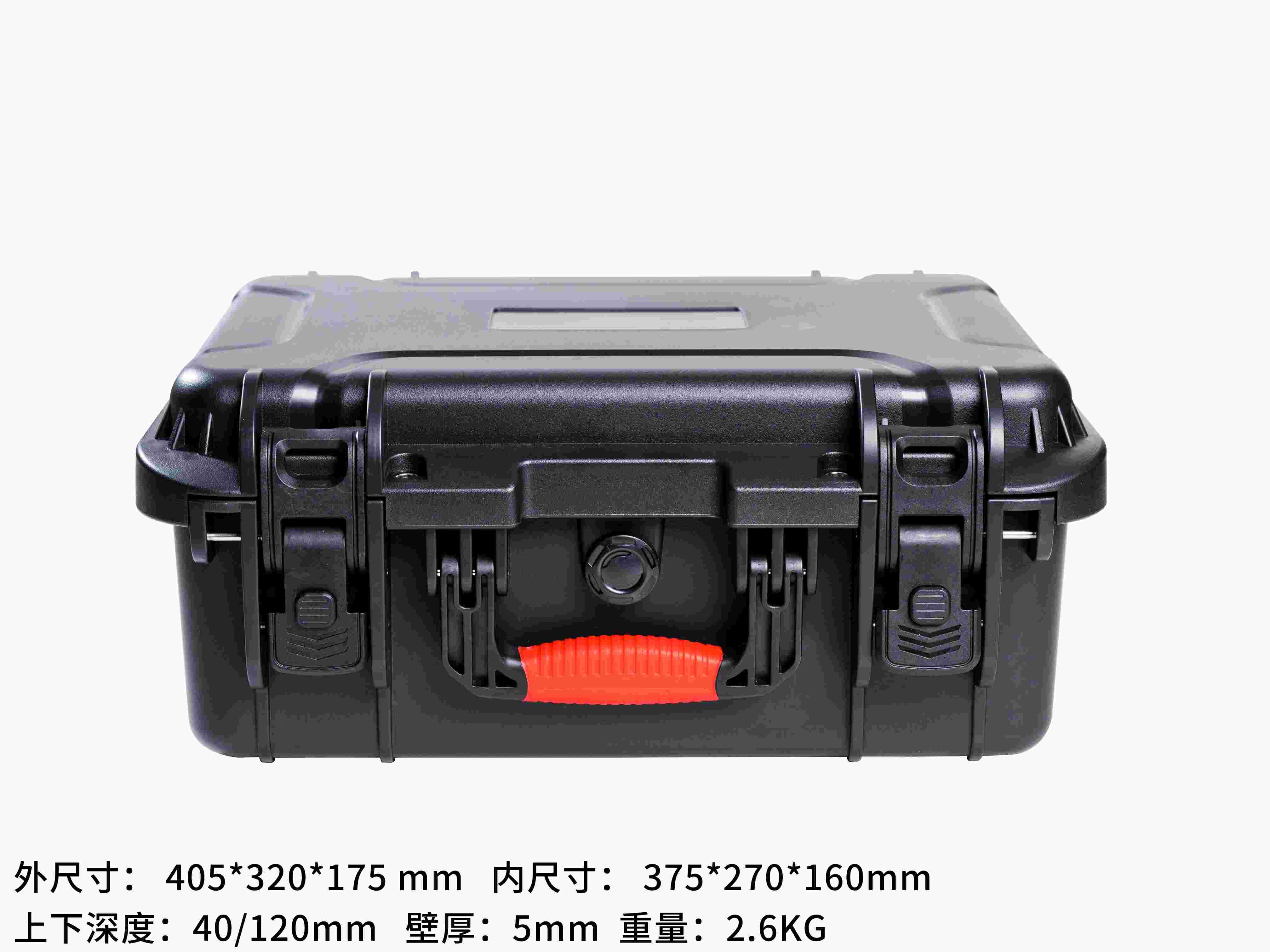
Choosing between PP (polypropylene) and ABS (acrylonitrile-butadiene-styrene) is the single most important material decision when selecting a protective case. These two engineering plastics dominate the global protective case market, each offering distinct advantages that align with different use scenarios, budgets, and performance requirements. This guide provides a comprehensive, data-driven comparison to help procurement professionals, engineers, and end-users make informed decisions.
PP (Polypropylene) Characteristics
Polypropylene is a semi-crystalline thermoplastic polymer renowned for its exceptional chemical resistance, low density, and excellent fatigue endurance. In the protective case industry, PP is the material of choice for KeXin's Series 1 (compact PP cases) and Series 8 (heavy-duty large cases). Here are the defining properties:
Chemical Resistance
PP exhibits near-universal resistance to organic solvents, acids, and alkalis at room temperature. It is virtually unaffected by ethanol, acetone, most mineral acids, and alkali solutions up to pH 12. This makes PP cases ideal for chemical industry applications, laboratory instrument transport, and any scenario where accidental chemical exposure is possible. Only strong oxidizing acids and certain chlorinated hydrocarbons at elevated temperatures pose a risk to PP's integrity.
Electrical Insulation
PP's volume resistivity exceeds 10¹⁶ Ω·cm, making it one of the best electrical insulators among commodity plastics. This property is critical for cases housing sensitive electronic instruments, EMI-sensitive equipment, and devices that must be electrically isolated from their transport environment. Unlike some plastics that become conductive when wet, PP maintains its insulating properties even under high humidity.
Lightweight Advantage
PP's density of approximately 0.90 g/cm³ makes it the lightest structural plastic used in protective cases — lighter even than water. For large cases like those in KeXin's 8-series, this low density translates directly into reduced shipping weight, lower freight costs, and easier manual handling. A WL8442 PP case weighs approximately 30% less than an equivalent-size ABS case, a significant advantage when air freight cost is calculated per kilogram.
Low-Temperature Toughness
PP retains substantial impact resistance at temperatures as low as -20°C, and with copolymer grades (used in all KeXin PP cases), effective toughness extends to approximately -40°C. This low-temperature performance is essential for cases used in cold-chain logistics, Arctic expeditions, high-altitude air transport, and any application where the case may encounter sub-freezing conditions. At these temperatures, PP actually outperforms ABS, which becomes brittle below approximately -20°C.
Fatigue Resistance
PP's crystalline structure provides exceptional resistance to cyclic mechanical loading — the repetitive hinge bending, latch clamping, and handle pulling that protective cases endure over years of service. PP can withstand over 10⁷ cycles of flexural loading without crack initiation, far exceeding ABS's fatigue limit. This is why KeXin's Series 8 PP cases are specified for applications involving frequent opening and closing, such as daily-access field equipment kits.
PP Pros: Lightest weight, best chemical resistance, excellent low-temperature toughness, superior fatigue endurance, lowest material cost, food-safe grades available, recyclable (resin code 5).
PP Cons: Lower surface hardness (easily scratched by sharp objects), lower room-temperature impact strength compared to ABS, narrower aesthetic range (limited high-gloss finish options), higher coefficient of thermal expansion, UV degradation without stabilizer additives.
ABS (Acrylonitrile-Butadiene-Styrene) Characteristics
ABS is an amorphous thermoplastic terpolymer that combines three monomers — acrylonitrile for chemical and thermal resistance, butadiene for impact toughness, and styrene for rigidity and surface quality. KeXin uses ABS exclusively in its Series 6 protective case line, which targets applications demanding premium aesthetics alongside functional protection.
Surface Hardness and Gloss
ABS achieves surface hardness ratings of R100-R110 on the Rockwell scale, substantially harder than PP at approximately R70-R80. This higher hardness means ABS cases resist scratching from tools, hardware, and abrasive handling better than PP equivalents. ABS also naturally produces a high-gloss surface during injection molding without secondary processing, enabling the sleek black and silver finishes that distinguish KeXin's Series 6 cases. The gloss level can be precisely controlled through mold polish grade, from satin to mirror finish.
Room-Temperature Impact Strength
ABS's notched Izod impact strength at 23°C ranges from 200 to 400 J/m depending on grade, significantly higher than PP's 30-150 J/m at the same temperature. The butadiene rubber phase in ABS absorbs impact energy through micro-cavitation and shear band formation, creating a sophisticated energy-dissipation mechanism. This makes ABS the superior choice for applications where the case experiences high-energy single impacts — drops onto hard surfaces, vehicle collision scenarios, and heavy-object falls.
Dimensional Stability
ABS's amorphous structure provides excellent dimensional stability across temperature changes. Its coefficient of thermal expansion is approximately 70-90 × 10⁻⁶/°C, lower than PP's 100-150 × 10⁻⁶/°C. For cases requiring precise seal groove dimensions, latch alignment tolerances, and panel-mount fitting accuracy, ABS maintains these critical dimensions more reliably than PP when ambient temperature fluctuates. This is particularly important for IP67 sealing integrity — if the seal groove expands or contracts excessively, the O-ring compression changes, potentially compromising waterproof performance.
Surface Treatment Options
ABS accepts virtually every surface treatment technology: painting (wet spray and powder coat), electroplating (chrome, nickel), texturing (chemical etching and laser engraving), printing (silk-screen, pad, thermal transfer), and film laminating. This versatility makes ABS the material of choice for OEM/ODM projects where the case must match brand identity requirements, carry complex graphics, or integrate visual inspection windows with precise edge finishing. PP's low surface energy limits paint adhesion and printing durability, requiring specialized primers and surface activation treatments.
ABS Pros: Highest room-temperature impact strength, superior surface hardness and scratch resistance, excellent high-gloss finish, best dimensional stability, widest surface treatment versatility, better UV resistance (with stabilizers), professional aesthetic appeal.
ABS Cons: Higher density (1.04-1.07 g/cm³, ~15% heavier than PP), lower chemical resistance (attacked by concentrated acids, ketones, some chlorinated solvents), becomes brittle below -20°C, higher material cost than PP, susceptible to yellowing under prolonged UV without stabilizers, recyclability limited by multi-component composition.
Comprehensive Comparison Table
| Property | PP | ABS |
|---|---|---|
| Density (g/cm³) | 0.90-0.91 | 1.04-1.07 |
| Impact Strength (Izod, J/m @23°C) | 30-150 | 200-400 |
| Low-Temp Impact (Izod, J/m @-20°C) | 15-80 (copolymer) | 20-100 |
| Surface Hardness (Rockwell R) | 70-80 | 100-110 |
| CTE (×10⁻⁶/°C) | 100-150 | 70-90 |
| Chemical Resistance | Excellent | Moderate |
| Electrical Insulation | Excellent | Good |
| Fatigue Resistance | Excellent | Moderate |
| Surface Finish Options | Limited | Extensive |
| Material Cost (relative) | Lower | Higher (~20-30% more) |
| UV Resistance (unstabilized) | Poor | Poor (better with stabilizer) |
| Recyclability | Good (code 5) | Limited (code 7) |
Scene-Based Recommendations
Rather than declaring a universal winner, the right material choice depends entirely on your application scenario:
- Chemical Industry / Laboratory: PP is the clear choice. Its near-total chemical resistance protects instruments from accidental exposure to solvents and reagents. KeXin Series 1 and 8 PP cases are standard in pharmaceutical and chemical laboratories worldwide.
- Cold-Chain / Arctic / High-Altitude Transport: PP copolymer maintains toughness at -40°C. If your case will encounter freezing conditions, PP is the safer selection. ABS becomes brittle and prone to crack propagation below -20°C.
- High-Frequency Access / Daily Opening: PP's superior fatigue resistance means hinges and latch mechanisms last longer under repetitive cycling. Medical field kits, daily tool cases, and service engineer kits benefit from PP's fatigue endurance.
- High-Impact Single Events / Rough Handling: ABS absorbs more energy in a single high-intensity impact at room temperature. Military transport, construction site equipment, and logistics hubs with rough handling favor ABS's impact toughness.
- Premium Branding / Aesthetic Requirements: ABS's high-gloss finish, color depth, and surface treatment versatility make it the only choice when the case must serve as a brand ambassador as well as a protector. Consumer electronics, high-end photography equipment, and luxury instrument cases demand ABS.
- Air Freight / Weight-Sensitive Logistics: PP's 0.90 density saves 15% per-unit weight compared to ABS. At volume, this weight difference translates into significant freight savings. International distributors shipping hundreds of cases per month should calculate the cumulative freight cost difference before choosing ABS for aesthetic reasons.
- OEM/ODM with Custom Graphics: ABS's surface treatment versatility (painting, plating, printing, texturing) provides the designer's full palette. PP requires specialized surface activation for reliable printing adhesion, limiting custom branding options.
PP+ABS Composite: The Emerging Middle Ground
Recent advances in polymer blending technology have created PP+ABS composite materials that combine key advantages of both parent polymers. These blends use compatibilizer agents (typically maleic-anhydride-grafted PP) to create a stable microstructure where ABS domains provide impact toughness and surface quality while the PP matrix maintains chemical resistance and low density.
KeXin's R&D lab is currently testing PP+ABS blend formulations for the upcoming injection-molded case series, targeting a material that delivers ABS-level surface finish with PP-level weight and chemical resistance. Preliminary results show impact strength of 180-250 J/m (between pure PP and pure ABS), density of 0.95 g/cm³ (closer to PP), and good paint adhesion without primers (closer to ABS). If final validation succeeds, this composite material could eliminate the need to choose between PP and ABS for many mid-range applications.
Conclusion
PP and ABS each excel in distinct performance domains. PP wins on weight, chemical resistance, low-temperature toughness, and fatigue endurance. ABS wins on room-temperature impact strength, surface quality, dimensional stability, and branding versatility. The right choice is always application-specific. KeXin offers both materials across its product lines — Series 1 and 8 in PP, Series 6 in ABS — ensuring every customer finds the material that matches their scenario. For guidance on which series best fits your requirements, contact KeXin through the inquiry form.