
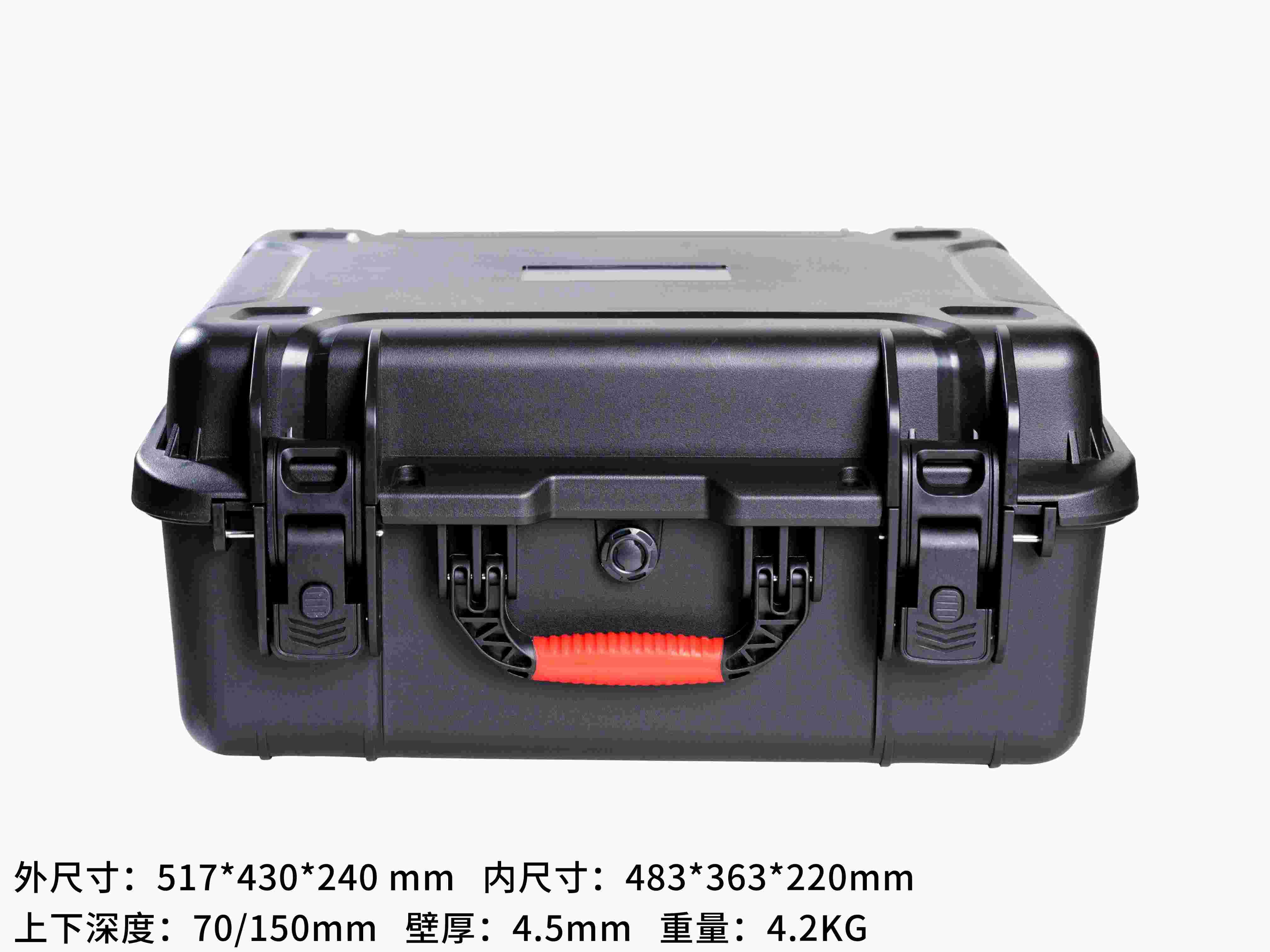
Geological exploration, environmental monitoring, and field research take place in harsh environments where equipment must be transported through heat, cold, humidity, dust, and even water. Protective cases are the first line of defense for these precision instruments.
High and Low Temperature Challenges
Outdoor surveys can range from hot deserts to freezing glaciers. Ordinary plastic cases can become brittle in the cold or soften in the heat. KeXin uses improved PP and ABS formulations with an operating range of -20°C to 120°C, ensuring the case does not crack or deform under extreme conditions.
Waterproof and Dustproof Requirements
Field work often involves rain, mud, and dust. An IP67 rating means the case is completely dust-tight and can withstand submersion in 1 meter of water for 30 minutes. KeXin cases use silicone O-ring seals that resist aging and temperature extremes, maintaining reliable sealing over long-term use.
Drop and Impact Protection
Rough mountain roads, boat vibrations, and helicopter transport all create drop and vibration risks. Protective cases should provide rigid walls and reinforced rib structures, high-density EVA foam inserts to absorb impact, straps or tie-downs to prevent movement, and anti-slip feet and stackable design.
Portability and Organization
Field surveys often require carrying multiple sensors, cables, stands, and tools. Case interiors can be designed with multi-layer foam, drawer-like dividers, and labeling systems for quick access. Trolley handles and wheels help with long-distance transport.
Recommended Solutions
KeXin recommends Series 8 large cases for geological and environmental monitoring equipment, and Series 6 medium cases for portable sensors and instruments. All cases can be customized with foam and accessories for specific survey missions.