
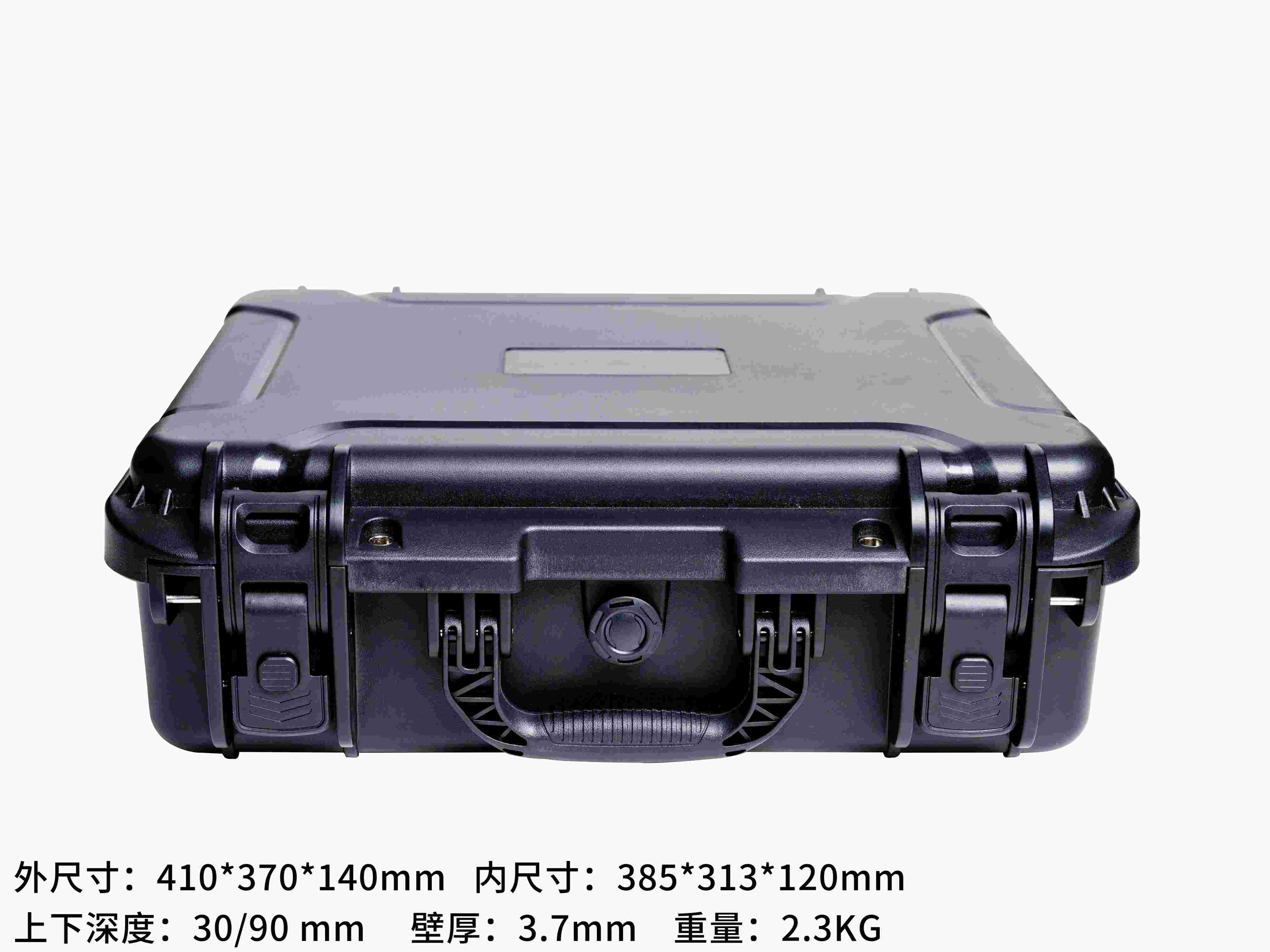
When your business requires protective cases that match your exact equipment specifications, brand identity, and market positioning, OEM (Original Equipment Manufacturing) and ODM (Original Design Manufacturing) services provide the solution. KeXin has delivered over 3,000 custom case projects across 60+ countries in the past 25 years, and our streamlined OEM/ODM process ensures every project moves from concept to finished product with precision, transparency, and speed.
This guide walks you through every stage of the KeXin OEM/ODM workflow, explains the technical details behind mold development and foam engineering, and highlights the quality assurance protocols that guarantee your custom cases perform flawlessly in real-world conditions.
Step 1: Initial Consultation and Requirement Analysis
The OEM/ODM journey begins with a structured consultation. KeXin's project managers and engineers work with you to capture every detail that will influence the final product:
- Equipment specifications — exact dimensions, weight, fragility points, and any protruding features (handles, lenses, connectors) that must remain accessible when the equipment is inside the case
- Operating environment — temperature range, humidity, dust exposure, salt spray, UV intensity, and any chemical exposure the case must withstand
- Transport and storage conditions — whether the case will be air-freighted, shipped by sea, carried as hand luggage, or stored in vehicle trunks for months
- Regulatory requirements — IP rating needs, military specifications (MIL-STD-810G/H), CE/RoHS/REACH compliance, and any industry-specific certifications (medical ISO 13485, aviation EASA)
- Brand customization level — from simple logo embossing to fully proprietary shell design with custom color, texture, and internal layout
- Volume and timeline — initial order quantity, projected annual volume, and target delivery dates
Within 48 hours of receiving your requirements, KeXin provides a Project Scope Document that outlines the recommended case series, material selection, customization options, estimated mold cost, and a preliminary timeline. This document becomes the reference point for all subsequent decisions.
Step 2: Concept Design and 3D Modeling
Once the scope is approved, KeXin's design team translates your requirements into a complete 3D model. This stage covers both the external shell geometry and the internal foam layout:
- Shell design — using SolidWorks and AutoCAD, our engineers model the case body, lid, handle system, latch positions, hinge geometry, and any custom features (wheels, pull handles, accessory ports, stacking feet). Every dimension is verified against your equipment profile with at least 5–10 mm of clearance for foam thickness.
- Sealing architecture — the 3D model includes O-ring groove placement, gasket compression calculations, and pressure equalization valve integration. For IP67-rated cases, the seal system is designed to maintain 1.5× the minimum compression ratio even after 10,000 open/close cycles.
- Foam cavity layout — CNC foam cutting paths are designed in parallel with the shell, ensuring that cutout depth, wall thickness, and equipment pocket geometry all match the case interior exactly.
- Branding integration — embossed or debossed logo placement, recessed label areas, and any surface texture modifications are modeled at this stage
The 3D design package includes renderings, cross-section views, and a Design Review Report that highlights potential issues (e.g., wall thickness below 3 mm at certain points, latch stress concentrations) along with proposed solutions. You review and approve before we proceed to mold development.
Step 3: Mold Development and Manufacturing
Mold quality directly determines case consistency, surface finish, and production longevity. KeXin invests in premium mold steel and advanced simulation to ensure every mold produces flawless shells from the first shot to the 500,000th.
Mold Steel Selection
All KeXin production molds use Assab 718H or P20 pre-hardened steel, which offers:
- Hardness of 33–38 HRC for consistent surface replication
- Excellent polishability for high-gloss or textured finishes
- Corrosion resistance that prevents pitting over long production runs
- Wear resistance rated for 500,000+ injection cycles before any dimensional deviation exceeds 0.05 mm
MoldFlow Simulation
Before any steel is cut, KeXin runs MoldFlow analysis on every mold design. This simulation predicts:
- Melt front progression and potential weld lines
- Air trap locations and vent placement requirements
- Shrinkage and warpage predictions for each wall section
- Injection pressure distribution and cooling channel efficiency
MoldFlow typically reveals 3–5 optimization opportunities per mold design. Addressing these before machining saves weeks of trial-and-error during the sampling phase and ensures first-article samples are within 0.3 mm of design intent.
Mold Construction Timeline
Standard mold development takes 45–60 days from design approval to T0 (first trial shot). The process includes:
- Steel procurement and initial machining — 15 days
- CNC electrode machining and EDM detailing — 15 days
- Assembly, fitting, and surface polishing — 10 days
- T0 trial injection and dimensional inspection — 5 days
- T1/T2 modifications (if any) — 5–10 days
For urgent projects, an expedited 30-day mold process is available with priority workshop allocation and weekend fitting shifts.
Step 4: Sample Production and Validation
After T0, KeXin produces 5–10 sample units for your comprehensive validation. The sample evaluation covers:
- Dimensional accuracy — every critical dimension measured against the 3D model with ±0.3 mm tolerance
- Visual and surface quality — gloss level, color consistency, texture depth, and logo embossing clarity
- Functional testing — latch operation, hinge cycling (1,000 open/close repetitions), handle load testing (50 kg pull), wheel and telescopic handle deployment
- Sealing performance — IP67 dust and water immersion test per IEC 60529, including a 30-minute immersion at 1 meter depth
- Drop testing — 1.2 m free-fall onto concrete from all six faces, three edges, and one corner (9-drop sequence per MIL-STD-810G Method 516.7)
- Equipment fit verification — your actual equipment placed inside with the custom foam insert; all access points and operational features confirmed
You receive the complete Sample Validation Report with photographic evidence, test data tables, and any T1 modification recommendations. Once you sign off on the samples, mass production begins.
Step 5: Mass Production and Quality Control
KeXin's 20,000 m² manufacturing facility runs 24 injection machines (260–1500 ton clamp force), 6 CNC foam centers, and 8 assembly lines. Quality control is embedded at every production stage:
Incoming Material Inspection (IMI)
Every batch of PP or ABS resin is tested for melt flow index, tensile strength, and impact resistance before entering the production line. Material certificates and RoHS/REACH compliance documentation are archived per batch.
In-Process Quality Checks
During injection, operators monitor:
- Injection pressure and hold pressure consistency
- Cycle time deviation (target: ≤3% variation)
- Surface quality — flash, sink marks, silver streaks, short shots
- Weight consistency — each shell weighed against the target ±2% tolerance
Final Inspection and Packaging (FIP)
Every finished case undergoes a 12-point inspection checklist before packaging:
- Shell and lid dimensional check (6 points)
- Latch engagement and retention force
- Handle attachment integrity
- Seal compression uniformity
- Foam insert fit and cutout accuracy
- Surface finish and branding clarity
AQL (Acceptable Quality Level) is set at Level II, AQL 0.65 for critical defects and 1.0 for major defects. Any unit failing the FIP is quarantined, root-caused, and either reworked or scrapped — never shipped to the customer.
Step 6: Packaging, Logistics, and Delivery
Custom cases are packed per your specifications. Standard packaging includes:
- Individual polybag wrapping to prevent surface abrasion
- Stacked in 5-ply corrugated cartons with corner protectors
- Carton labeling with product code, quantity, PO number, and destination
- Palletization for sea freight (standard EUR or US pallet formats)
- Custom packaging options available: retail-ready boxes, branded shrink wrap, kitting with accessories
KeXin ships via sea freight (FCL or LCL), air freight, or express courier. Typical lead times from production completion to delivery:
- Sea freight (FCL): 25–35 days to Europe, 15–25 days to Southeast Asia, 35–45 days to South America
- Air freight: 5–7 days worldwide
- Express courier: 3–5 days for sample or small-batch orders
MOQ Flexibility and Cost Structure
KeXin's OEM/ODM program accommodates businesses of all sizes with tiered minimum order quantities:
- Standard case customization (logo, color, foam from existing mold) — MOQ 50 units
- Custom foam insert only (CNC-cut to your equipment, no shell changes) — MOQ 20 units
- New mold development (proprietary shell design) — MOQ 1,000 units
- Multi-cavity production molds (for high-volume orders >5,000 units/year) — MOQ negotiated per project
The cost structure for a typical OEM project includes:
- Mold investment: $5,000–$25,000 depending on case size, cavity count, and surface complexity. Mold cost can be amortized into the unit price for orders exceeding 3,000 units.
- Unit price: determined by material (PP or ABS), case size, foam complexity, and customization level. Standard cases range from $8–$35 per unit; fully custom designs range from $15–$80 per unit.
- Foam insert: CNC EVA foam from $2–$8 per set depending on density, layers, and cutout complexity
- Accessory costs: wheels, telescopic handles, panel frames, and custom latches priced per specification
Typical Project Timeline Summary
From first inquiry to delivery at your warehouse, a standard OEM/ODM project follows this timeline:
- Week 1–2: Consultation, requirement analysis, and Project Scope Document
- Week 3–4: 3D design, MoldFlow simulation, and design approval
- Week 5–10: Mold development (45–60 days)
- Week 11–12: Sample production and validation
- Week 13–16: Mass production (15–25 days for 1,000 units)
- Week 17–20: Packaging, logistics, and delivery
Total project duration: 16–20 weeks for new mold projects, 6–10 weeks for standard customization from existing molds. Expedited timelines are available for urgent requirements.
Why Choose KeXin for OEM/ODM
KeXin's OEM/ODM program delivers advantages that few competitors can match:
- 25 years of manufacturing experience — deep process knowledge across PP, ABS, and composite shell production
- 28 patents covering seal technology, structural design, foam engineering, and manufacturing processes
- In-house mold workshop — no outsourcing delays; mold modifications completed in 3–5 days
- Full foam customization — CNC cutting, multi-density layering, and die-cut options all under one roof
- Global compliance capability — CE, RoHS, REACH, and custom certification support for any target market
- 60+ country delivery network — established logistics partnerships that simplify cross-border shipping
- Flexible MOQ — from 20-unit foam orders to 10,000-unit production runs
- Transparent pricing — detailed cost breakdowns with no hidden fees; mold amortization options available
Conclusion
OEM/ODM custom protective case manufacturing is a complex process that demands precision at every stage — from understanding your equipment requirements to delivering finished cases that perform under the harshest conditions. KeXin's six-step process provides clarity, control, and confidence throughout the journey, backed by 25 years of expertise, 28 patents, and a proven track record of 3,000+ successful custom projects.
Whether you need 50 branded cases from an existing series or a fully proprietary design with a new mold, KeXin's OEM/ODM team is ready to start. Contact us today to discuss your project requirements and receive a custom scope document within 48 hours.