
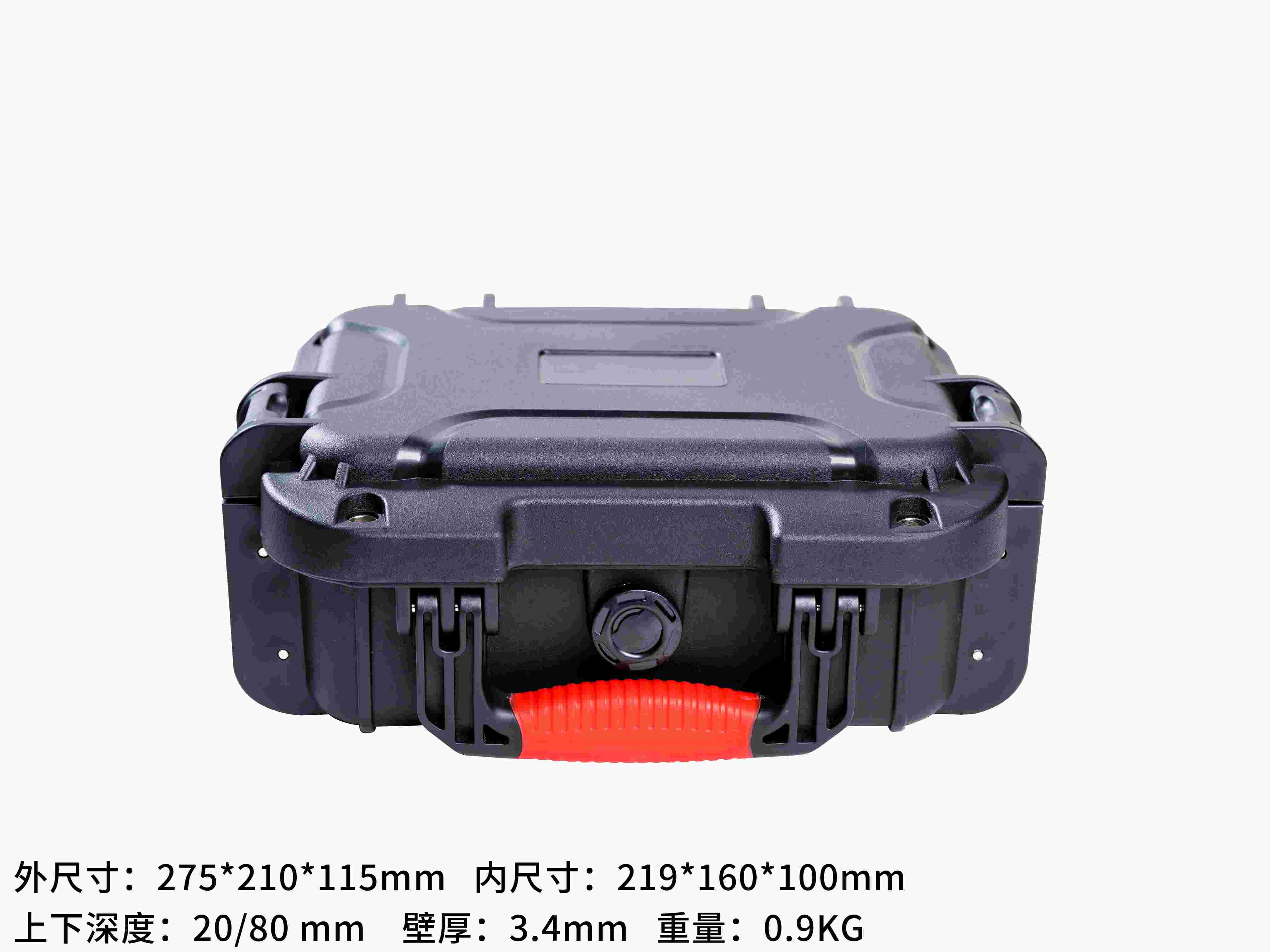
When you see "IP67" stamped on a protective case, what exactly does it guarantee? Is it waterproof forever? Can you submerge it indefinitely? Does it protect against high-pressure water jets? The answers are more nuanced than most buyers assume. This guide decodes the IP67 rating under the international IEC 60529 standard, explains what each digit means, describes the actual testing procedures, and provides practical advice for verifying genuine IP67 certification when purchasing protective cases.
IP Code Structure: Decoding the Standard
The International Protection (IP) code system, defined by IEC 60529 ("Degrees of protection provided by enclosures"), uses a two-digit format where each digit represents a specific level of protection against a specific threat:
- First digit (0-6): Protection against solid objects and dust ingress
- Second digit (0-8): Protection against water ingress
- Additional letters (optional): A for high-voltage access, B for finger access, C for tool access, D for wire access, H for high-voltage device, M for moving parts during water test, S for static parts during water test, W for weather conditions
Therefore, IP67 means: first digit 6 (complete dust protection) + second digit 7 (protection against temporary immersion in water up to 1 meter depth for 30 minutes). It does NOT mean the case is "waterproof" in the colloquial sense of unlimited underwater use. Understanding this distinction is critical for making informed purchasing decisions.
Dust Protection Ratings (First Digit: 0-6)
| Digit | Protection Level | Test Method |
|---|---|---|
| 0 | No protection | N/A |
| 1 | Objects >50mm (hand) | 50mm sphere probe |
| 2 | Objects >12.5mm (finger) | 12.5mm jointed finger probe |
| 3 | Objects >2.5mm (tools) | 2.5mm tool probe |
| 4 | Objects >1mm (wires) | 1mm wire probe |
| 5 | Dust-protected (limited ingress) | Dust chamber, 8 hours |
| 6 | Dust-tight (no ingress) | Dust chamber, 8 hours, vacuum |
Level 6 is the highest dust rating. The test places the enclosure in a sealed dust chamber with talcum powder (particle size defined by IEC 60529) circulating at 2 m/s velocity for 8 hours. A vacuum pump draws air through the enclosure at a specified flow rate. After the test, no dust shall be visible inside the enclosure when examined without magnification. KeXin's Series 6, 8, and selected Series 1 cases all achieve IP6X dust protection through precision-molded seal grooves and continuous O-ring systems.
Water Protection Ratings (Second Digit: 0-8)
| Digit | Protection Level | Test Condition |
|---|---|---|
| 0 | No protection | N/A |
| 1 | Dripping water (vertical) | 1mm/min rainfall simulation, 10 min |
| 2 | Dripping water (15° tilted) | 4 positions tilted 15°, 10 min each |
| 3 | Spraying water | Oscillating spray, 60° angle, 10 min |
| 4 | Splashing water | Oscillating spray, 180° angle, 10 min |
| 5 | Water jets | 6.3mm nozzle, 12.5 L/min, 3m distance, 15 min |
| 6 | Powerful water jets | 12.5mm nozzle, 100 L/min, 3m distance, 15 min |
| 7 | Temporary immersion (1m, 30min) | Immersion tank, 1m depth, 30 min |
| 8 | Continuous immersion (manufacturer-specified depth/time) | Agreed depth/time per manufacturer claim |
A critical misunderstanding: IPX7 does NOT imply IPX5 or IPX6 protection. The IEC 60529 standard explicitly states that a higher second digit does not automatically include the protection levels of lower digits unless the enclosure is dual-marked (e.g., IPX5/IPX7). This is because the water jet test (IPX5/6) applies directional pressure to specific surface areas, while the immersion test (IPX7) tests static water pressure uniformly. A case that seals under static immersion may leak under a directed jet's dynamic pressure. KeXin's Series 8 cases are tested and certified for both IPX7 immersion and IPX5 jet resistance, carrying the dual marking IP65/IP67.
IP67 Design Essentials for Protective Cases
Achieving genuine IP67 protection requires coordinated engineering across four critical design systems:
Seal Ring System
The O-ring seal is the primary barrier against both dust and water. For IP67, the seal must meet stringent requirements:
- Material: Silicone rubber (VMQ) or fluorosilicone (FVMQ) for temperature range -60°C to +200°C. EPDM is acceptable for -40°C to +120°C. Neoprene (CR) provides oil resistance but limited temperature range.
- Compression ratio: 15-25% of original cross-section diameter. Under-compression leaves gaps; over-compression causes permanent set and seal failure.
- Groove design: Precision-milled groove with tolerance ±0.05mm on width and depth. The groove must be continuous around the entire perimeter with no discontinuities at corner radii.
- Surface finish: Groove surfaces must achieve Ra ≤ 0.8 μm roughness to prevent micro-leakage paths along the seal contact line.
Latch System
Latches must deliver sufficient clamping force to compress the O-ring to its design compression ratio uniformly around the entire perimeter. KeXin's 8-series uses four stainless steel butterfly latches, each delivering 500N of clamping force. The key design principle: latch spacing must ensure no point on the seal perimeter is more than 150mm from the nearest latch, preventing under-compressed "soft spots" between latches. Inadequate latch count or spacing is the single most common cause of IP67 failure in protective cases.
Fit Precision
The mating surfaces between lid and body must achieve flatness and dimensional tolerances that maintain the groove-to-groove alignment within ±0.15mm across all operating temperatures. PP's higher coefficient of thermal expansion (100-150 × 10⁻⁶/°C) means a case that seals perfectly at 20°C may develop seal misalignment at -40°C if the body and lid have different wall thicknesses creating asymmetric thermal contraction. KeXin's engineering team uses finite element thermal analysis to verify seal integrity across the full operating temperature range before approving any new model.
Pressure Relief Valve
An automatic pressure equalization valve is essential for any sealed case that will be air-transported or subjected to rapid temperature changes. Without pressure equalization, altitude changes during air freight create negative internal pressure that can make the case impossible to open, or positive pressure from solar heating that can force the lid open. KeXin's automatic valve opens at ±0.05 bar differential and reseals instantly when pressure equalizes. The valve itself must be IP67-rated to maintain overall case protection.
How to Verify Genuine IP67 Certification
The market contains cases marked "IP67" that have never been independently tested. Here are practical verification steps:
- Request the certification report: A genuine IP67 claim must be backed by a test report from an accredited laboratory (ILAC MRA member, such as SGS, TUV, Intertek, or CSTC). The report must specify the test standard (IEC 60529), the specific model tested, and pass/fail results for each test condition. KeXin provides SGS-issued IP67 test reports for every certified model upon customer request.
- Check seal material quality: Genuine IP67 cases use silicone or fluorosilicone O-rings with Shore A hardness 50-70. Inferior cases use cheap PVC or low-grade rubber strips that lack the compression recovery and temperature stability required for long-term IP67 performance. Visually, genuine O-rings are smooth, uniform in cross-section, and seated in precision-milled grooves — not pressed into rough-molded channels.
- Simple DIY immersion test: For a quick verification, seal the empty case, submerge it in a bucket of water at approximately 1 meter depth for 30 minutes. After removal, open the case and inspect for any moisture inside. A genuine IP67 case should be completely dry. Note: this informal test does not replace professional certification but can reveal gross deficiencies in counterfeit IP67 claims.
Typical IP67 Application Scenarios
IP67 protection aligns with specific professional use patterns:
- Medical field equipment: Portable diagnostic instruments transported between hospital departments and field clinics encounter dust, cleaning spray, and occasional immersion during wash-down procedures.
- Outdoor broadcasting: Camera and audio equipment exposed to desert dust storms and rainy location conditions. The dust-tight rating (6) prevents sensor and lens contamination; the immersion rating (7) protects against accidental rain puddle immersion.
- Industrial inspection instruments: NDT equipment operating in dusty manufacturing floors and outdoor construction sites where rain and ground water exposure is routine.
- Military tactical equipment: Communication gear, field computing devices, and medical supplies deployed in desert, tropical, and arctic environments where dust and water exposure is constant.
- Marine and offshore: Ship maintenance tools and instruments exposed to salt spray, rain, and potential immersion during boat-to-platform transfers.
IP67 Maintenance Tips
Even a properly designed IP67 case requires regular maintenance to sustain its rated protection:
- O-ring inspection: Check the seal ring every 6 months for cracks, permanent deformation, hardness change, or contamination. Silicone O-rings in KeXin cases are designed for a 3-5 year service life under normal conditions; replace immediately if any deterioration is visible.
- Groove cleaning: Before closing the case, ensure the O-ring groove is free of sand, dust, and debris. Even a single grain of sand trapped under the O-ring creates a leak path that compromises IP67.
- Latch maintenance: Lubricate latch pivot points with silicone-based lubricant annually. Never use petroleum-based lubricants on silicone O-rings — they cause swelling and accelerated degradation.
- Pressure valve check: Verify the automatic valve diaphragm is clean and unobstructed. A clogged valve cannot equalize pressure, potentially causing seal stress or lid lock during air transport.
- Storage posture: Store cases with latches closed and O-ring seated in the groove. Storing an open case allows the O-ring to relax and potentially take a permanent set, reducing compression when the case is next closed.
Conclusion
IP67 means complete dust exclusion and temporary immersion protection — a powerful combination for professional equipment transport. But it requires genuine engineering, quality materials, and proper maintenance. KeXin's IP67-certified Series 6, Series 8, and selected Series 1 cases deliver verified protection backed by SGS test reports. Choose wisely, verify certifications, and maintain your seals to ensure your equipment stays dry and dust-free throughout its service life. For specific IP67 case recommendations matching your application, visit the products page or submit an inquiry.