
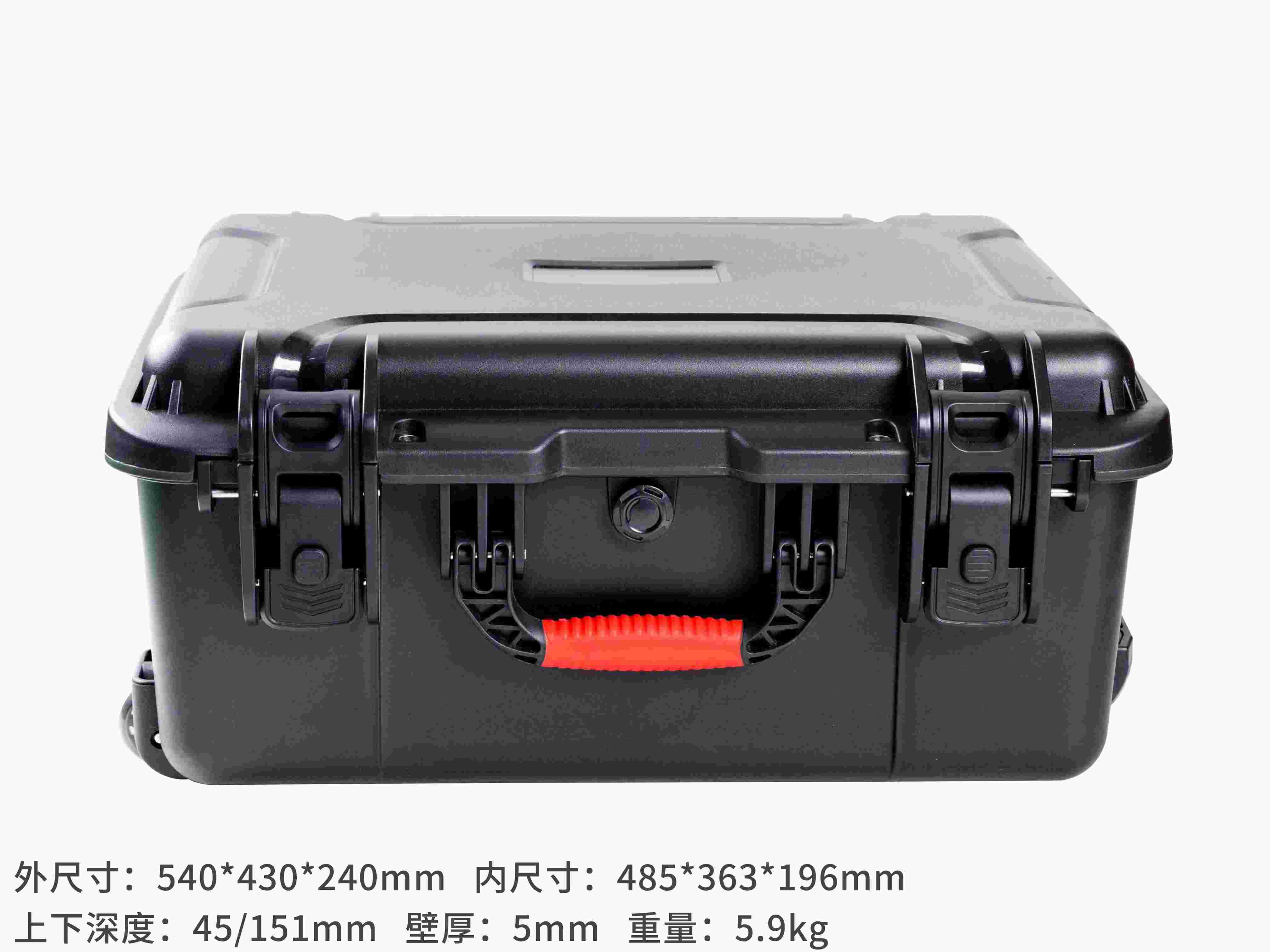
In emergency response, equipment failure is measured in lives. When firefighters deploy to a burning building, search-and-rescue teams enter a collapsed structure, or medical first responders reach a mass casualty scene, the protective cases carrying their equipment must deliver absolute reliability under the most demanding conditions imaginable. This guide examines the specialized requirements for emergency rescue equipment cases and the solutions KeXin provides to emergency services worldwide.
Unique Requirements for Emergency Response Cases
Emergency cases differ fundamentally from general industrial or commercial cases. The critical requirements are shaped by the realities of emergency operations. Rapid deployment is paramount—seconds matter when lives are at stake, and cases must open instantly, present equipment in a logical layout, and never jam or stick regardless of temperature, contamination, or frequency of use. All-weather reliability must be absolute—emergency cases are deployed in blizzards, rainstorms, floods, dust storms, and extreme heat, and must protect equipment regardless of conditions. Modular organization enables mission-specific loading—a single case platform must adapt to different response scenarios without requiring separate case inventories. High visibility aids rapid identification in chaotic scenes, while ergonomic design for manual carry is essential when vehicles cannot access the scene.
Design Features for Emergency Response
Color-Coded Identification System
In the chaos of an emergency scene, responders must instantly identify the correct case without reading labels. A standardized color-coding system—red for firefighting, orange for search and rescue, white for medical, blue for command and communications, yellow for hazmat—provides visual recognition at a glance, even in smoke, darkness, or peripheral vision. KeXin offers emergency cases in high-visibility colors with UV-stabilized pigments that maintain color integrity through years of sun exposure. Integrated reflective elements—3M Scotchlite or equivalent retroreflective strips molded into or bonded to the case exterior—make cases visible in headlights and flashlight beams at night, reducing the risk of cases being struck by vehicles at roadway incident scenes.
Quick-Release Latch Systems
Standard case latches that require sequential operation are unacceptable for emergency applications. Quick-release latch systems allow all latches to be released simultaneously with a single pull, enabling the lid to be thrown open in one motion. Latches must operate reliably while wearing firefighting gloves (NFPA 1971 compliant), with oversized actuation surfaces, tactile feedback confirming engagement, and audible click-on-closure that can be heard over scene noise. Spring-loaded latch mechanisms that snap closed without manual alignment are preferred—the responder should be able to simply push the lid down and have all latches engage automatically. KeXin's emergency-rated latch systems are tested to 10,000 cycles minimum, far exceeding standard commercial latch requirements.
IP67+ All-Weather Sealing
Emergency cases must maintain watertight integrity in conditions that would defeat standard IP67 cases. High-pressure fire hose spray, complete submersion in floodwater, driving rain at highway speeds on the exterior of vehicles, and fine dust from collapsed structures all threaten seal integrity. KeXin's emergency cases employ dual-seal systems—a primary D-type silicone seal backed by a secondary lip seal—providing redundant ingress protection. Silicone is specified over EPDM for emergency applications due to its wider temperature range and superior aging resistance, despite the higher material cost. Pressure equalization valves with hydrophobic membranes prevent vacuum lock after temperature changes while excluding water and contaminants.
Modular Interior Tray Systems
A single case platform should support multiple mission configurations through interchangeable interior trays. A base case might carry structural search-and-rescue equipment in one tray configuration, medical supplies in another, and breaching tools in a third—all using the same outer case. Modular trays are constructed from laser-cut EVA foam laminated to rigid aluminum or composite panels, with quick-disconnect fasteners that allow tray changes in under 30 seconds. Each tray is clearly labeled with its contents list and expiration dates for time-sensitive supplies. Color-coded pull tabs on tray edges provide immediate identification of tray contents when only the edge is visible during rapid extraction from a vehicle compartment.
Lightweight Construction for Manual Carry
Emergency responders frequently carry cases significant distances—up stairwells in high-rise buildings, across rough terrain at wilderness rescue scenes, through debris fields at earthquake sites. Case weight directly impacts responder fatigue, speed of movement, and operational endurance. KeXin achieves weight reduction through optimized wall thickness using finite element analysis to remove material only in non-structural areas, high-strength PP copolymer formulations that achieve required impact resistance at thinner sections, and foam density optimization that balances protection with weight. Ergonomic handle designs with contoured grips, multiple handle positions for different carry modes (one-hand carry, two-hand carry, shoulder carry with strap), and padded shoulder strap attachment points reduce physical strain during extended carry.
Application-Specific Solutions
Firefighting Equipment Cases
Firefighting cases must withstand direct water impingement from high-pressure hoses (exceeding standard immersion test requirements), exposure to elevated temperatures during proximity to fire operations, and contamination from soot, ash, and firefighting foam chemicals. Cases for thermal imaging cameras require specialized foam liners that protect sensitive optics and electronics while allowing rapid access. Cases for gas detection instruments, positive pressure ventilation fans, and hydraulic rescue tool power units are typically large-format designs based on KeXin 8-Series platforms with heavy-duty wheels and telescoping handles for transport across incident scenes. Red case bodies with yellow or orange accent panels provide immediate visual identification among the diverse equipment on a fire apparatus.
Earthquake Search and Rescue (SAR) Cases
Urban search and rescue teams operating in collapsed structures require cases that survive the same hazards their personnel face—falling debris, sharp edges from fractured concrete and rebar, and fine particulate dust that clogs seals and abrades surfaces. SAR cases must be stackable and interlocking for organized transport to the incident site, with integrated lashing points for helicopter sling operations when road access is blocked. Cases for search cameras, listening devices, and concrete cutting/breaching equipment require high-density foam liners that protect sensitive equipment from the vibration inherent in debris field operations. Orange high-visibility cases with reflective markings ensure cases are not lost in the visual chaos of a collapse scene.
Medical First Responder Cases
Tactical emergency medical cases for SWAT medics, wilderness EMS, and mass casualty incident response must organize a large inventory of medical supplies in a logical, accessible layout that enables rapid treatment under stress. Interior organization uses labeled, removable pouches and modules organized by treatment priority—airway management, hemorrhage control, IV access, medications, splinting, and wound care. Cases must withstand repeated disinfection with hospital-grade cleaners and provide clear documentation of supply expiration dates. White cases with red medical crosses provide universal identification, and smooth, non-porous interior surfaces enable thorough cleaning after contamination with blood or bodily fluids.
Flood and Water Rescue Cases
Water rescue cases require positive buoyancy—the case must float when loaded with equipment, preventing loss in deep or moving water. This is achieved through closed-cell foam in the case walls and lid, creating sufficient displacement to exceed the weight of the case and contents. Cases for water rescue must be brightly colored (international orange or rescue yellow) for visibility on water, with integrated D-rings for tethering to rescue boats or personnel. Drainage channels molded into the case exterior prevent water accumulation in recessed areas when the case is retrieved from immersion. Cases for water rescue equipment—throw bags, personal flotation devices, rescue boards—are typically large-format designs sized to fit within the storage compartments of rescue boats and vehicles.
KeXin Emergency Case Customization Capabilities
KeXin provides comprehensive customization for emergency response organizations, from single-unit prototypes for field evaluation to fleet-wide deployments. Our customization capabilities include case color in any RAL or Pantone color with UV-stabilized pigments, reflective marking integration using 3M retroreflective materials, custom foam interiors designed from equipment dimensions or 3D scans with graduated density layers for optimized impact protection, screen-printed or laser-engraved identification markings including agency logos, unit identifiers, and equipment inventory lists, and custom interior tray and module systems designed for specific equipment sets and operational workflows. We work directly with emergency response agencies to understand their operational requirements and translate them into case solutions that perform reliably when it matters most.
Conclusion
Emergency rescue equipment cases represent the most demanding application for protective case engineering. The consequences of failure—equipment damage that delays rescue operations, seal failure that compromises medical supplies, case breakage that slows response—are measured in human lives. KeXin's commitment to this market is reflected in our specialized emergency case designs that incorporate rapid-deployment features, redundant sealing systems, modular interior configurations, high-visibility finishes, and lightweight construction—all backed by the same rigorous testing standards that qualify our cases for military deployment. When your mission is saving lives, your equipment cases cannot be the weak link.