
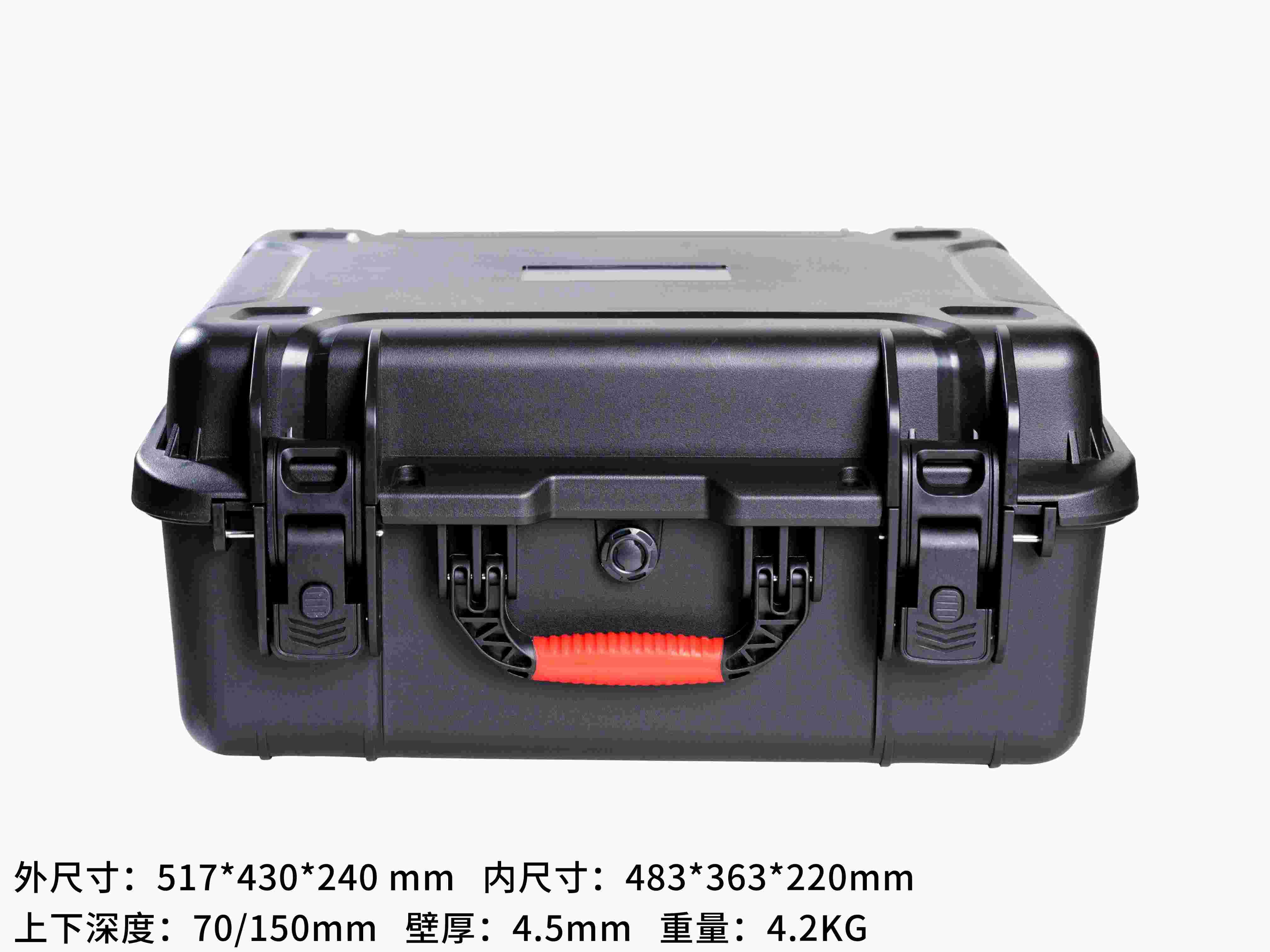
Buying protective cases seems straightforward—until you discover that the "bargain" cases you ordered don't fit your equipment, leak after one rain shower, or crack on their first flight. Procurement mistakes in protective cases are expensive: they cost you not just the price of the wrong case, but potentially the value of damaged equipment, operational downtime, and reputational damage with your own customers. Based on KeXin's 25 years of experience helping thousands of clients specify protective cases, here are the 10 most common purchasing mistakes and how to avoid them.
Mistake 1: Comparing by Price Alone, Ignoring Material Quality
The most common and most costly mistake is evaluating cases solely on unit price without understanding what drives cost differences. Two cases that appear identical in online photos can have dramatically different performance due to material choices. A PP case made from premium impact-modified copolymer with UV stabilizers costs 20–30% more than one made from standard homopolymer PP with no additives, but the difference reveals itself on the first cold-weather field deployment when the cheap case shatters on impact. Similarly, recycled or regrind plastic can reduce raw material cost by 40–60%, but the resulting case will have inconsistent mechanical properties, potential contamination, and unpredictable longevity. The correct approach is to request material certification from the manufacturer and specify the exact resin grade in your purchase order. KeXin provides material certifications for every batch, and we use only virgin, first-grade resins from certified suppliers.
Mistake 2: Trusting Unverified IP67 Claims
The IP67 rating has become so common in protective case marketing that it is often taken at face value without verification. The uncomfortable truth is that many "IP67" claims are based on design calculations, not actual testing, and even tested cases can lose their IP integrity due to poor quality control in mass production. A case designed with an O-ring channel but no seal compression verification may pass a one-off lab test but fail consistently in the field. The proper approach is to ask the supplier for IP67 test reports—not just a claim on a datasheet—and to perform your own IP67 spot checks on received shipments. Immersing a sample case loaded with paper towels in a bucket of water for 30 minutes is a crude but effective field verification that anyone can perform. KeXin includes IP67 batch test reports with shipments for our sealed case series.
Mistake 3: Underestimating the Importance of Foam Quality
The foam liner is not an accessory—it is the primary energy management system that protects equipment from shock and vibration. Purchasers often focus exclusively on the case shell while accepting whatever stock foam comes with the case. This is a critical error. Inadequate foam—wrong density, wrong material, wrong cut quality—can cause equipment damage even when the case itself survives undamaged. For heavy equipment (>5 kg), high-density EVA foam (70–100 kg/m³) with CNC-cut precision cavities is essential to prevent the equipment from bottoming out through the foam during impact. For lightweight, delicate instruments, medium-density foam (45–60 kg/m³) with layered construction provides graduated energy absorption. Custom foam fitting is an investment in equipment protection that typically costs 10–20% of the case price—a fraction of the cost of repairing or replacing damaged equipment.
Mistake 4: Choosing Cases by External Dimensions Instead of Internal
This measurement confusion is almost universal among first-time case buyers. Case dimensions are specified by internal dimensions—the usable space for equipment—but many purchasers mistakenly compare external case dimensions to their equipment measurements. The result is a case that is too small, discovered only when the equipment arrives and doesn't fit. Equally problematic is forgetting to account for foam liner thickness. A case with 400mm internal width becomes 340mm usable width after installing 30mm foam on each side. When specifying cases, always measure your equipment including cables, accessories, and any protrusions, add 20–30mm clearance on each dimension for foam, and confirm that the case's stated internal dimensions accommodate this total space. When in doubt, provide your equipment dimensions to the case manufacturer and ask them to recommend the appropriate case size.
Mistake 5: The "Bigger is Safer" Fallacy
The logic seems sound: a bigger case provides more foam and more protection. In reality, an oversized case introduces its own problems. Excessive internal space means equipment can shift during transport unless the foam liner is unrealistically thick. An oversized case is heavier—increasing shipping costs, reducing the number of cases that fit in a vehicle or on a pallet, and potentially exceeding airline weight limits. Perhaps most critically, the case's structural performance is optimized for its designed payload range. A case rated for 20 kg of equipment that is loaded with only 3 kg will not deform correctly during a drop, transferring more impact energy to the equipment rather than absorbing it through the case structure and foam system. Choose the case size that fits your equipment with the recommended foam thickness—no bigger.
Mistake 6: Forgetting Accessory Storage Space
The primary equipment fits perfectly, but where do the cables go? The spare batteries? The calibration standards? The cleaning kit? Time after time, users realize only after taking delivery that their carefully specified case has no provision for the accessories and consumables that must accompany the equipment. The proper approach is to inventory everything that will travel in the case—primary equipment, all cables and connectors, power supplies and chargers, spare parts and consumables, tools required for setup and operation, documentation—and provide this complete list to the case manufacturer during the foam design phase. Layered foam designs with dedicated accessory compartments beneath the equipment tray are an excellent solution for organizing accessories while keeping the main equipment immediately accessible when the case is opened.
Mistake 7: Ignoring Airline and Transport Size Limits
A case that is perfect for road transport may be impossible to take on an airplane. Standard airline checked baggage limits are typically 158 cm (62 inches) linear (length + width + height) and 23–32 kg (50–70 lbs) per piece. Oversized and overweight baggage fees can exceed the cost of an additional airline ticket, and some carriers simply refuse to accept items exceeding their limits. Even within airline limits, consider that the case plus equipment plus foam must meet the weight restriction—a 15 kg case is already halfway to the typical 32 kg limit before any equipment is loaded. For military and humanitarian logistics, cases must fit within standard pallet dimensions (1200 x 1000 mm or 1200 x 800 mm) and ISO container dimensions. Specifying a case that cannot be economically transported defeats the purpose of having a transport case.
Mistake 8: Not Checking Seal Material and Quality
The rubber seal around the lid perimeter is the gasket that makes a watertight case watertight—yet many purchasers never examine it before buying. Seal material directly determines temperature range, chemical resistance, and service life. A case with a generic black rubber seal of unknown composition may seal perfectly on day one but crack after six months of UV exposure, swell when exposed to common chemicals, or take a permanent compression set after being stored closed for a season. When evaluating cases, ask the supplier to identify the seal material (silicone, EPDM, or NBR), specify the seal cross-section geometry (D-type, P-type, O-type, or lip type), and request the seal's Shore A hardness and compression set specifications. A poorly specified seal will be the first component to fail, silently compromising the case's IP rating long before any visible damage appears.
Mistake 9: Overlooking Required Certifications
Your case may be perfect for your equipment but non-compliant with the regulations of your target market. Missing certifications can result in customs rejection, fines, or mandatory product recall—problems that surface long after the case purchase order is complete. For EU exports, CE marking is mandatory, typically requiring compliance with the Low Voltage Directive (for cases with electronic components), EMC Directive, and RoHS Directive (restriction of hazardous substances). REACH regulation requires registration and authorization for substances of very high concern (SVHCs) above threshold limits. For the US market, California Proposition 65 requires warning labels if the case contains listed chemicals above safe harbor levels. Before ordering, confirm with your supplier which certifications apply to your market and request the relevant certificates and test reports. KeXin maintains CE, RoHS, and REACH compliance documentation for all standard products.
Mistake 10: Skipping Sample Testing Before Bulk Order
The most preventable of all mistakes is ordering hundreds or thousands of cases based on a product photograph and datasheet without ever holding a sample in your hands. No amount of specification review can substitute for physically testing a case with your actual equipment. A sample allows you to verify that the equipment fits with appropriate clearance, that the foam provides adequate support and retention, that the latches operate smoothly with acceptable force, that the case stacks and handles as expected, and that any labeling or custom colors meet your requirements. The cost of a sample case—including express shipping—is typically $100–300, a fraction of the cost of a rejected shipment of 500 cases that don't meet your needs. KeXin welcomes and encourages sample orders before production quantities, and our engineers provide full support during the sample evaluation process including foam adjustments and case modifications based on your feedback.
A Better Procurement Process
Avoiding these 10 mistakes requires a structured approach to protective case procurement. Define your requirements clearly—equipment dimensions and weight, transport modes, environmental conditions, certification needs, budget constraints. Research materials and suppliers with the depth appropriate to the criticality of your application. Request and review documentation—material certifications, test reports, compliance certificates. Order samples and test them rigorously with your actual equipment in conditions representative of your operations. And finally, build a relationship with a manufacturer who provides the technical support and transparency to guide you through this process. KeXin's 25-year track record of supplying protective cases to demanding industries—military, medical, industrial, broadcast, scientific—is built on exactly this consultative approach to case specification and procurement.
Conclusion
Every one of these 10 purchasing mistakes is preventable with proper due diligence. The cost of prevention—time spent specifying requirements, reviewing documentation, testing samples—is trivial compared to the cost of correction: damaged equipment, failed certifications, rejected shipments, and operational disruptions. The organizations that get the most value from their protective case investment are those that treat case procurement as an engineering decision, not a commodity purchase. Invest the time to do it right, and your cases will protect your equipment for a decade or more.