
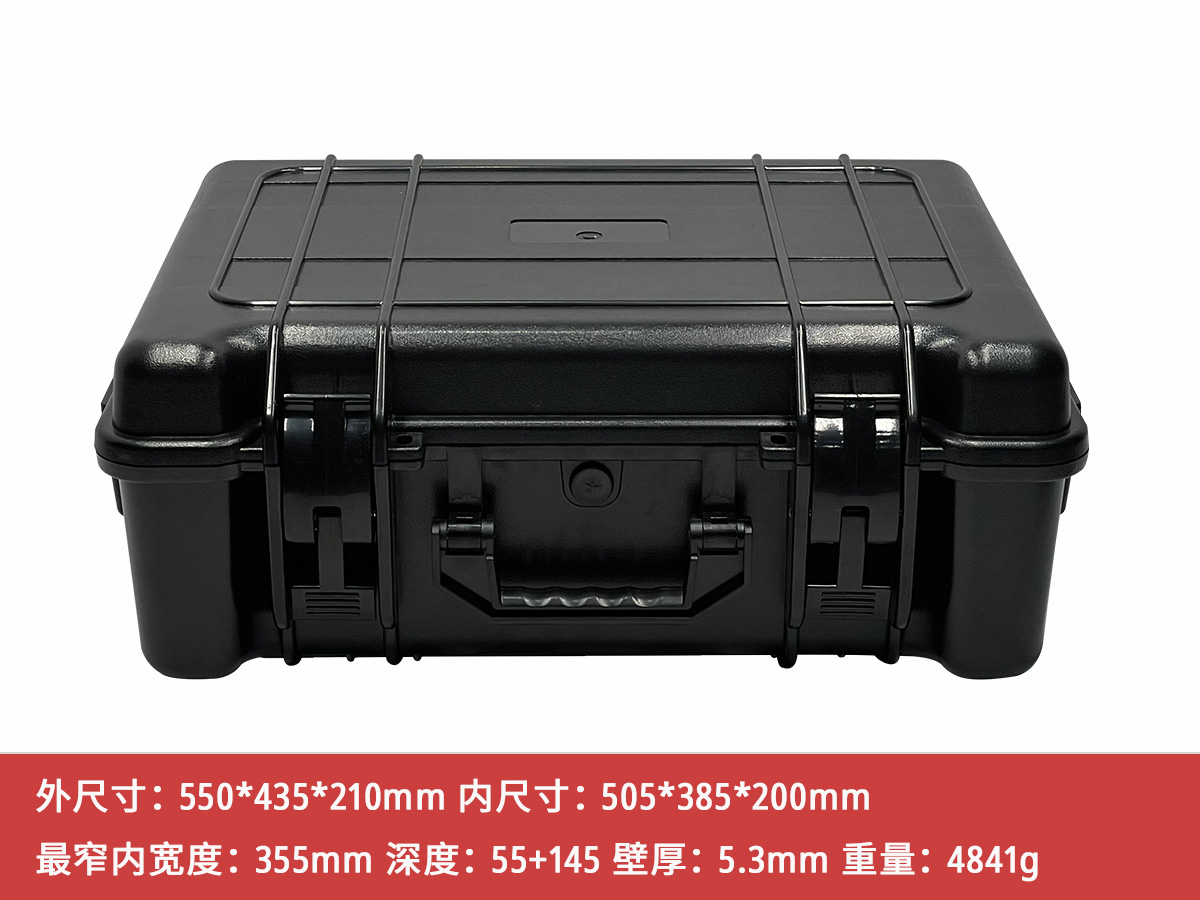
Electrostatic discharge (ESD) is an invisible threat that silently destroys electronic components worth billions of dollars annually. A discharge as low as 10 volts—imperceptible to human senses—can destroy a magnetoresistive read head, and discharges of 30–100 volts can catastrophically damage MOSFET transistors, integrated circuits, and precision sensors. For industries handling ESD-sensitive devices, the protective case itself must be part of the static control solution. This guide explains how ESD protective cases work, the material options available, and how to select the right ESD case for your application.
Understanding ESD Damage Mechanisms
ESD damage occurs through three primary mechanisms. Catastrophic failure is the most obvious—the component is instantly and permanently destroyed, typically through oxide breakdown, junction burnout, or metallization fusing. This is detectable in testing but represents only about 10% of ESD-related failures. Latent damage is far more insidious—the component is weakened but continues to function, only to fail prematurely in the field weeks, months, or years later. Latent damage is estimated to account for 90% of ESD-related field failures and is virtually impossible to detect in standard outgoing quality testing. Finally, upset failure occurs when an ESD event temporarily disrupts device operation without causing permanent damage—data corruption, system resets, or erroneous sensor readings—that may go unnoticed but cause cascading operational problems.
A standard (non-ESD) plastic protective case can be an ESD hazard factory. Triboelectric charging—the generation of static electricity through friction—occurs continuously as equipment vibrates against the foam liner during transport, as the case exterior rubs against other surfaces, and even as the user removes equipment from the case. A non-conductive plastic case has no path to dissipate this charge, allowing dangerous voltage potentials to accumulate. The case effectively becomes a capacitor, storing electrostatic energy that discharges through the first conductive path it finds—typically the sensitive electronics inside.
Three ESD Material Categories
ESD protective cases are classified by the surface resistivity of the case material, measured in ohms per square (Ω/sq). This classification follows the ANSI/ESD S20.20 and IEC 61340-5-1 standards.
Conductive Materials (10² to 10⁵ Ω/sq)
Conductive case materials provide the fastest charge dissipation and the best EMI/RFI shielding. These materials are typically produced by incorporating conductive carbon black or carbon fiber into the base polymer (PP or ABS) at loadings of 20–40% by weight. The high carbon loading creates a continuous conductive network throughout the material, with surface resistivity low enough to rapidly drain static charges to ground.
The advantages of conductive cases include near-instantaneous charge dissipation (nanoseconds), inherent EMI/RFI shielding effectiveness (20–40 dB depending on carbon loading and thickness), and permanent conductivity throughout the material thickness—surface scratches do not create insulating spots. The limitation is aesthetic: conductive cases are always black due to the carbon filler loading, and the high filler content can make the material slightly more brittle than unfilled grades. Conductive cases are the preferred choice for Class 0 ESD sensitive devices (HBM sensitivity < 250V) and applications requiring EMI shielding, such as cases for satellite components, missile guidance electronics, and aerospace avionics.
Static Dissipative Materials (10⁶ to 10⁹ Ω/sq)
Static dissipative materials provide controlled charge dissipation—fast enough to prevent hazardous charge accumulation, slow enough to prevent damaging discharge currents. This is the "sweet spot" for most ESD protective applications and the most commonly specified ESD case category.
Static dissipative properties are achieved through inherently dissipative polymers (IDPs)—specialty thermoplastic compounds that are permanently static dissipative without relying on humidity-dependent anti-static coatings. Unlike carbon-filled materials, IDPs can be produced in a range of colors, providing visual differentiation for case contents while maintaining ESD control. The dissipation mechanism in IDPs relies on a polymer blend morphology where conductive domains are dispersed at the nano-scale throughout an insulating matrix, creating a controlled percolation network that limits resistivity to the desired range without reaching full conductivity.
Static dissipative cases are the standard choice for electronics manufacturing environments (SMT assembly lines, PCB transport, component storage), semiconductor fabrication support, and general ESD protected area (EPA) applications. They meet the requirements for protecting Class 1A (250V–500V HBM) and Class 1B (500V–1000V HBM) sensitive devices while offering better mechanical properties and color options than fully conductive materials.
Anti-Static Materials (10⁹ to 10¹² Ω/sq)
Anti-static materials resist triboelectric charging—they do not generate significant static charge through friction—but they dissipate charge slowly. This category typically relies on topical anti-static treatments applied to the surface of standard plastic cases. The treatment works by absorbing atmospheric moisture to create a thin conductive layer on the surface, or by providing migratory anti-static agents that bloom to the surface over time.
The critical limitation of topical anti-static treatments is that they are not permanent. They can be removed by cleaning, abrasion, or handling, and their effectiveness is highly dependent on relative humidity—below 15% RH, most anti-static treatments become ineffective. They are suitable for short-term or single-use applications but should not be specified for critical long-term ESD protection. KeXin recommends anti-static cases only for non-critical applications where the primary concern is reducing dust attraction (static-cling of airborne particles) rather than protecting ESD-sensitive devices.
KeXin ESD Case Solutions
KeXin offers ESD protective cases based on both PP and ABS material platforms, providing static dissipative performance with surface resistivity customizable between 10⁶ and 10⁹ Ω/sq per customer specification. Our ESD cases are produced using inherently dissipative polymer technology that provides permanent, humidity-independent ESD protection throughout the material thickness.
Beyond the case shell, a complete ESD protective solution requires ESD-safe internal components. KeXin provides conductive foam liners (typically carbon-impregnated polyurethane or polyethylene foam with surface resistivity < 10⁴ Ω/sq) that ensure any charge generated within the case is safely conducted to the case shell and from there to ground. All metal hardware on ESD cases is connected to the conductive case body to maintain electrical continuity—there are no electrically isolated metal components that could accumulate charge. Grounding provisions (threaded inserts with grounding straps or snap connectors) are available for permanent grounding connections in EPA environments.
Selection Guide by HBM Sensitivity Level
Class 0 (0V–250V HBM): Conductive cases with resistivity < 10⁴ Ω/sq, conductive foam liners, continuous grounding provisions. Required for bare die, magnetoresistive heads, SAW filters, and unprotected laser diodes. EMI shielding may be required as secondary protection. KeXin Series 6 ESD with conductive carbon-filled ABS and full EMI gasket sealing.
Class 1A (250V–500V HBM): Static dissipative cases with resistivity 10⁶–10⁸ Ω/sq, dissipative foam liners, grounding provisions. Standard for most semiconductor devices, integrated circuits, and precision electronic assemblies. KeXin Series 6 and Series 8 ESD with IDP formulation.
Class 1B (500V–1,000V HBM): Static dissipative cases with resistivity 10⁷–10⁹ Ω/sq, anti-static or dissipative foam liners. Suitable for less sensitive ICs, passive components, and completed electronic assemblies in EPA environments.
Class 2 (1,000V–2,000V HBM): Static dissipative or anti-static cases with anti-static foam. Basic ESD protection for assembled equipment, field-replaceable units (FRUs), and electronic subassemblies with inherent ESD protection.
Verifying ESD Performance
ESD performance is not a one-time certification—it must be verified through periodic testing throughout the case's service life. Surface resistivity should be measured per ASTM D257 or IEC 61340-2-3 using a calibrated megohmmeter with concentric ring electrode. Measurements should be taken at multiple points on both interior and exterior surfaces. The test environment must be controlled at 12% or 50% RH (per customer requirement), as some materials show significant resistivity variation with humidity. Resistance-to-ground measurements (per ANSI/ESD STM4.1) verify the continuity of the grounding path from the case interior through to the grounding connection point.
KeXin certifies each ESD case batch with documented surface resistivity measurements, providing traceable quality records that support our customers' ESD control program audits per ANSI/ESD S20.20 requirements.
Conclusion
ESD protective cases are essential infrastructure for any organization handling static-sensitive electronics. The choice between conductive, static dissipative, and anti-static materials depends on the sensitivity level of the devices being protected, the operational environment, and the required service life. KeXin's ESD case solutions, based on inherently dissipative polymer technology with customizable resistivity and full system integration of shells, foam, hardware, and grounding, provide reliable, permanent ESD protection that meets the rigorous requirements of ANSI/ESD S20.20 and IEC 61340-5-1 standards. When device failure is measured in millions of dollars per incident, an investment in proper ESD protective cases is among the highest-return risk mitigation decisions an organization can make.